Tech
Business

Ryan Thorp
Founder
,
Fload
This Founder Got 50m+ Downloads with 40+ Apps
Ryan Thorp reveals the playbook behind launching 40+ mobile apps with 50M+ downloads, and building a scalable app studio.
Transcript
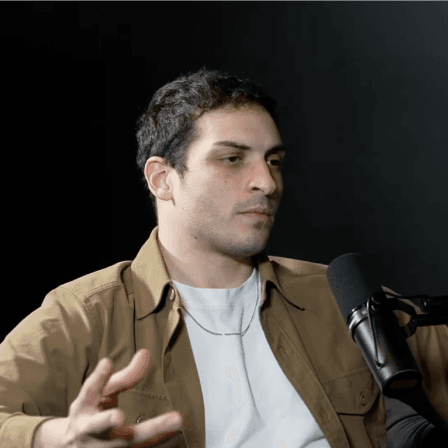
Manav: Meet Ryan Thorp, founder of Fload, an AI-powered platform that helps mobile apps grow on autopilot. Ryan and his team have launched 40+ mobile apps with over 50 million downloads, using an app studio model instead of betting on a single hit. He got his start leading growth at Reflectly, took it to $4M ARR, then became co-founder, CMO, and COO of Reflective Apps, running a portfolio of productivity and lifestyle apps. Today he's here to talk about what Fload is building.
You went from selling Instagram accounts in Bali to pay off student debt, then joined Revolut and watched it grow to 4 million users through viral loops. What did you learn there, and how did they grow so fast?
Ryan: Revolut was my first job out of university — I was still studying in France at the time, and I came in as basically their first growth hire. What stood out on the marketing side was how focused they were on community early on. They knew they had to get their most engaged users talking about Revolut. It was a mix of a good product with viral mechanics built in — referring friends, split payments — plus building organic word of mouth as hard as we could. That meant me going to every event across the UK and Ireland, handing out Revolut cards, talking to people, building as many partnerships as possible, because Revolut had basically no marketing budget until around 2020. So community work and PR mattered a lot. Product virality is what carried it until the paid engine and brand work kicked in later.
Manav: So was their main growth engine paid ads, UGC, or something else?
Ryan: It was community first, product-led growth, which fed into community, then PR, then referrals — referrals was honestly the bulk of it — and then affiliates. That meant a big network of blogs and newsletters, plus partnerships in financial advice, travel, that kind of thing.
Manav: Got it. You went on to start an app studio, and Reflectly hit $3M ARR at one point. I want this episode to give people a playbook on finding creators, running UGC, running influencers, and running paid ads. Let's start with UGC — how do you source creators for your apps?
Ryan: It's changed a lot from a couple years ago. Back then there weren't all these platforms with a bank of pre-vetted creators. The old way was just going on TikTok, typing in keywords relevant to your app. If it's a habit tracker, you type "habits" and scroll until you find people making decent videos — the ones who aren't at tens of thousands of followers yet but clearly have something. Those are the people you reach out to. Usually their email's in the bio, or you find them on TikTok and message them on Instagram instead, since TikTok DMs aren't always accessible early on. Skip agencies or anyone trying to manage creators for a cut — go straight to the creator and build the relationship yourself. So: old way is scrolling by keyword, new way is using platforms that already have a bank of creators in your niche.
Manav: When you reach out, what do you offer — a retainer, or a one- or two-video deal?
Ryan: Usually we pay per video. There are performance-only, CPM-based models now, but at the end of the day the creator is putting in real hours to make content and learn your instructions, and they should get paid for that. Then there's a bonus on top if it performs well organically.
Manav: What does the payment structure actually look like — a dollar CPM bonus, something else?
Ryan: We pay per video as the base. I know the trend now is more toward pure performance deals, but I think that's harder to run and doesn't scale as well — you don't get the best talent that way, and they don't always make the video the right way if there's no guaranteed pay. That's the shift I've seen: it used to be flat per-video, now it's moving toward performance-based.
Manav: How do you land on an app idea? Some niches clearly do better than others — how do you think through that?
Ryan: The standard advice is to go on Reddit, TikTok, read the comments, see where the audience is. But that only works if you already know your audience. The money's usually in the niches — that part's true. But now it's a niche, then a niche of a niche. It's not "habit tracker," it's "fitness habit tracker," then "fitness habit tracker for people over 40." You end up combining demographic, geography, keywords, maybe gender, and that becomes your target market. Then you ask whether there's a real product that fits, whether the market's big enough, and whether there's evidence people will pay for it.
Sometimes it helps to look at your own life — what gives you a reason to actually finish the thing. Say you're 40 and dealt with a specific health issue and figured out a routine that helped — that becomes your playbook, because you've lived it and you know how to build it for someone else. Or you build it for one specific person — your mom, your dad, someone close to you — and that keeps you motivated.
One thing I've noticed: pull up the top 100 apps by revenue on the App Store, and 70 to 80% are photo or video editing apps. What do you make of that?
Manav: Yeah, that tracks —
Ryan: Some of the biggest apps out there are basically photo and video editors, and almost everyone falls into that audience at some level. With tools like Nano Banana making editing this easy now, it's not a complicated app to build, and it's a decent first app if you're just learning how to launch and market. I also don't think the older-demographic side of that market has really been touched yet.
Manav: AI changed things here too — take Cal AI. MyFitnessPal made you manually log everything, but Cal AI just has you take a photo and tells you the calories. It almost simplifies it too much for the user.
Ryan: Right, and there's a push and pull to that. When things get too easy, people stop appreciating the outcome. If counting calories takes zero effort, there's no real struggle behind it, so you lose some of the payoff. As things get easier, we get a bit disconnected from the result.
Manav: How do you run paid ads — what's the playbook?
Ryan: We used to run thousands of ads at once, so we kept the structure simple: level one, two, three. You can split it however you want across geographies, but that's the shape. Level one: take any video with organic traction, put $10 to $20 a day behind it, let it run for a day or two depending on your target CPA, CPI, cost per trial, whatever you're optimizing for. If it stays inside your target range, you let it ride. Then you duplicate it into level two at a higher spend, maybe $100 to $400, and see if it still holds. You're basically hunting for the point where a video starts to plateau, and you ride right at the edge of that as long as you can.
Manav: Who's the ideal customer for Fload?
Ryan: Right now, anyone launching their first app or their first few apps, or anywhere north of about $100K MRR. That's the point where you're not big enough for a full team, you've probably been burned by an agency or two, and you just need something — a co-pilot, a team of agents — telling you what to test each week, what benchmarks to hit, what pricing to try, and doing a lot of that automatically. There's a fork coming: either you run your app with agents, or you do it all manually, and the ones doing it manually are going to fall behind the ones who don't.
Manav: So it's like a Shopify Sidekick for mobile apps.
Ryan: Pretty much. You start an app, it has full context on what you've built, and it tells you what to do next — then goes and does it. Shopify built that layer for e-commerce; this is the version for apps. The first wave of AI was chatbots. This next wave is agents — you turn them on and let them run.
Manav: Last one — honest take, web app or mobile app?
Ryan: Mobile, for me. We tried the web route, and yeah, you pay Apple's cut, but I think what you get for that cut is worth it once you have some organic traction — discoverability, payment processing, all the infrastructure. With web, we ran into chargeback problems and a bunch of headaches you just don't deal with as a mobile app, because Apple's already solved them for you. Phones aren't going anywhere, and the App Store reaches basically everyone. There's the Mac App Store too, but who's really building web apps on purpose these days?
Manav: What would you do differently? You've done 40 apps — you've probably burned cash on some wrong calls along the way.
Ryan: The software that plugs into mobile apps usually starts cheap and gets a lot more expensive as you scale, and it eats into margin. We ended up cutting a lot of subscriptions to stay lean. I wish we'd done that earlier — once you have a bunch of apps, you're paying for CRMs, analytics tools, all sorts of things, and before you know it you're spending hundreds of thousands a month on tools you're barely using, because you were told you needed them. I'd be a lot more careful about that now, especially since there are cheaper ways to build small in-house versions of the same thing.
Manav: Right, that's the debate now — build your own Slack instead of paying for Slack. A lot of people are doing that.
Ryan: Yeah, and I think that's more possible now than it's ever been. And early on you don't have much cash anyway, so staying frugal and building it yourself helps regardless.
Manav: Thanks for coming on, Ryan. Where can people find you and learn more about what you're building?
Ryan: Find me on X — @helloryanj. If you want to learn more about mobile growth agents, go to fload.com and book a demo. We can talk growth, product, whatever.
Manav: Thanks.