Tech
Business

Mateo Greenberg
Founder
,
Creator Lookup
How I Built a $100k/Month Creator SaaS
Mateo Greenberg on going from sleeping on couches to nearly $100k MRR with Creator Lookup, a referral network for creator brand deals.
Transcript
Manav: Very volatile life as entrepreneurs. We went from mansions to sleeping on couches, to now what you see is nearly 100K MRR. So Mateo, you started your journey as a creator.
Mateo: I saw how managers treat the majority of their talent. They only focus on the top 20%, and we wanted to build a tool to empower that bottom 80%. One creator's trash is another creator's treasure. So we built this referral network where creators earn passive commission on every deal they share.
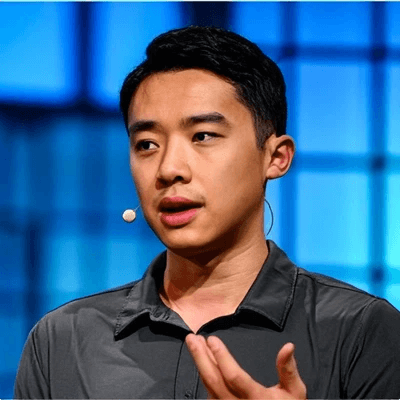
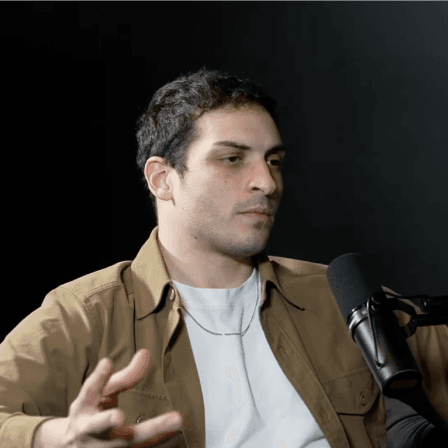
Manav: Today on the pod, we have Mateo Greenberg. He's the founder of Creator Lookup. Mateo went from sleeping on couches to 100K MRR in less than a year. So Mateo, what is the business you've built?
Mateo: While living in LA, I saw how managers treat the majority of their talent. They only focus on the top 20%, and we wanted to build a tool to empower that bottom 80% to discover more brand deals and fulfill them. That's when Jose and I launched BYOB, which stands for Be Your Own Boss. From there we built out a brand deal marketplace. The question was: how were we going to source the brand deals and put them on the marketplace? After some back and forth, we landed on: why don't we just have creators share deals with one another? One creator's trash is another creator's treasure. So we built this referral network where creators earn passive commission on every deal they share. For example, Ted Zahhar, he does—
Manav: What do you do for a living?
Mateo: Content, in New York City. He's a street interview guy.
Manav: Exactly. He doesn't do casino brand deals.
Mateo: Yeah, or gambling deals. And he sent that deal to us. We then empowered ten other creators to take it on, and he started earning $1,000 a month in commission.
Manav: Was there no way to scrape these deals online?
Mateo: We thought about doing it that way, but those are the same deals every other platform is sourcing.
Manav: Yeah. I think what a lot of people don't understand is that all these creator networks have this internal line of communication going on—it's not like a LinkedIn job post.
Mateo: Right. And oftentimes the deals you do scrape are too little, too late.
Manav: Oh.
Mateo: We were sharing the deal as soon as it landed in the creator's inbox.
Manav: Okay.
Mateo: And the creator could do the deal themselves, or share it with the community.
Manav: Got it. So how were you going to get paid from that?
Mateo: We were going to take a cut of the new brand deals we brought creators who otherwise wouldn't have had that opportunity.
Manav: And did you have the payment processing built inside it?
Mateo: This was all very, very manual. In those days we didn't really have the technical skill set.
Manav: Okay, okay. How long were you working on BYOB, and what happened with it?
Mateo: As soon as we graduated, we knew we didn't want to take a real job—we wanted to continue BYOB. We were blessed to get into an accelerator through MIT, and we spent that summer starting over from scratch. They encouraged us to stop building and just interview customers. It was amazing—we interviewed over 30 creators in less than 30 days and learned what their biggest pain points were. That year, the biggest pain points were sourcing more deals and making more money. It wasn't about spending less time or being more organized. It was really: how can I make more money through brand deals? And we realized that as much as this is a pain for creators, they're not willing to spend money to solve it. I also don't personally believe creators will share deals as much as you'd want them to.
Manav: That was another issue you were running into. So you were basically running out of cash.
Mateo: Yeah. For the first five years of Jose and I working together, we were either losing money or breaking even.
Manav: You worked on this for five years?
Mateo: Yeah, we worked together—this was one of many projects. We also rented a house in Beverly Hills and hosted creator events and parties. It was a $10 million house, and we put all our money into it—that just broke even. Luckily we didn't go into more debt. Very volatile life as an entrepreneur. We went from mansions to sleeping on couches, to now what you see is nearly 100K MRR.
Manav: People see the 100K MRR, but clearly it took you a very long time and a lot of painful lessons along the way. Can you explain what Creator Lookup is?
Mateo: It really starts with the pain of finding creators. For us that was the biggest challenge, and for so many of our brand and agency friends, it was theirs too. At the time, through BYOB and our agency, we were brokering lead lists on the side. Little did we know that was its own business. In January—about a year ago today—we decided to pivot completely toward a database of creators and make it as easy as possible to search.
Manav: I understand that pain point, because Instagram doesn't have a very good search bar for finding creators. Essentially, you're helping brands find creators at scale and land as many deals as possible, because it's a volume game.
Mateo: It is a volume game. Gone are the days when you could DM 50 creators and run a campaign. It takes a list of at least 1,000 to get maybe 100 responses. And that's what we do well. We have 400 million creators in our database, and you can search based on follower count, but also keywords in their bio, captions, hashtags, average views, and pull their email addresses—sometimes even phone numbers.
Manav: The interesting thing is that both you and Jose are non-technical, and you built this platform without any coding knowledge. Can you explain how?
Mateo: We made a lot of hiring mistakes trying to find a technical lead, a CTO. We realized we were outsourcing our leverage in a lot of ways, because we didn't know how long things were supposed to take—and honestly, we were being lied to. A lot of engineers were over-promising and under-delivering. It sucked, and we wasted a lot of time not just interviewing but managing those relationships. So Jose, my co-founder, decided to learn how to code. Thanks to prompting, and thanks to Cursor, we built our platform from scratch. We no longer need to wait for someone to respond just to make a change or update a feature.
Manav: That's incredible—without any coding language, you hit 100K MRR just by "vibe coding" the platform yourselves. This might be one of the best case studies of vibe coding I've come across. Can you talk about who your ideal customer is, and how you acquired your first customers?
Mateo: When we first launched, our ideal customer was anyone who would give us money. I went on freelancing platforms like Upwork and Fiverr, looking for anyone who needed basically a VA to source creators for them. Our first client was a sauna company looking for health and wellness creators. I sent them a list right away—I didn't even ask for money, and this was before we had a contract. They ended up loving the list and paying me. As soon as I had the money—before that, it was sitting in escrow—I sent Jose $100 on Apple Cash. This was right when we pivoted from BYOB, so morale was pretty low. We felt defeated, like it had been a waste of time and a failure. That $100 proving people would actually pay for this made a huge difference for our team.
Manav: Let's talk growth tactics. Have you experimented with any marketing at scale?
Mateo: The question was always: how do we scale? We used our agency background, as well as the network we'd built through BYOB, to source many of our first clients. When a creator gets an inbound email from a brand, we know that brand is already looking to work with more creators. So we could upsell them: "Hey, here's a list of ten other creators like Manav—let us know if you need more." That was a great funnel for our first 10 to 20 clients. From there, a lot of word of mouth. We also updated our own tool to source LinkedIn top voices in the marketing and influencer space—we'd use our own platform to find them, reach out, ask them to post, and then boost that post to more lookalikes.
Manav: So your business model is credit-based—you spend credits to get leads. Is that the whole model, or is there more?
Mateo: We really believe in giving a lot away for free. We're not afraid to give away 200 or 400 credits in creator leads, if that means that person eventually comes on for a search-plus-outreach campaign or full end-to-end management.
Manav: So it turns into a done-for-you outreach model.
Mateo: That's right. A lot of brands struggle with outreach—people are genuinely bad at following up.
Manav: And I think you guys have mastered outreach. As a brand, you're saving so much time it becomes a no-brainer.
Mateo: I'd hope so, yeah. The idea is: get as many users onto Creator Lookup as we can, see who the power users are, then hop on a call with them to see if they need more services. Our open rates are anywhere from 70 to 90%, with response rates averaging around 35%. Brands love filling out a short intake form and getting a pool of creators in their niche delivered to one inbox to choose from.
Manav: How did you get your initial customers for Creator Lookup?
Mateo: Hustling.
Manav: Hustle.
Mateo: We'd go to events every day. I think we met some of our biggest clients at parties here in LA—for example, at a 4th of July party. At Tech Week, at CES—all these brands need growth, and right now the best way to grow is influencer marketing.
Manav: And I agree—the best way to meet your customers is in person.
Mateo: Yeah, because outreach campaigns don't work nearly as well as in-person events. Once you have your first two, three, four clients, getting testimonials makes the sales so much easier. When you can't reach people in person, a testimonial is pre-built trust—other people vouching for you. It made a huge difference for us. I'd highly recommend filming those testimonials. I know it's not fun, but it's worth it.
Manav: What's on the 2026 roadmap for Creator Lookup? What features are you working on?
Mateo: Our vision is to make influencer marketing as easy as running paid ads. If you've ever launched a Facebook ad campaign, it's a few clicks and your budget is deployed, showing your content to your exact audience. That's our goal. We're still in the middle of it—we're keeping personal touchpoints, like our strategy calls, but we want to make it self-service, so those calls are optional.
Manav: Can we talk about your tech stack? Can you walk through the software you're using to run this company?
Mateo: Our backend is hosted on Fly.io, built with Python using FastAPI—that's the core of our scraping. Our front end is on Vercel, a Next.js project. For emails to new users, we use Resend for our onboarding flow. We use GA4 for user analytics and PostHog for session analytics—it's actually really entertaining to watch those sessions in real time. For coding the app, we use Claude and Cursor. For our website, we use Framer. For payments, Stripe and Row—shoutout to Alec at Row. And for email sending, we use SmartLead.
Manav: What does it cost to run CreatorLookup.com? People are curious what your margins look like.
Mateo: Great question. We're really scrappy—we always have been, because we had to be to survive. We're only burning about $5K a month right now, and most of that goes toward subscriptions.
Manav: On the pod, I ask every founder: if you could go back in time, what would you do differently?
Mateo: If I could go back and realize what impact AI would have on businesses, I wouldn't have spent nearly as much time trying to raise money. You really don't need it—it's a big distraction, a shiny object that's really just a vanity metric. A lot of founders focus on that when they should be focused on actually selling, actually getting users. It's refreshing, because people in LA actually focus on sales. You need to sell to have a business.