Tech
Health

Renee Dua
Founder
,
Together by Renee & Heal
She Sold Her Company for 9 Figures, What's Next?
Renee Dua, physician turned entrepreneur, on selling her healthcare house calls company Heal for nine figures to Humana and building her next AI health startup.
Transcript
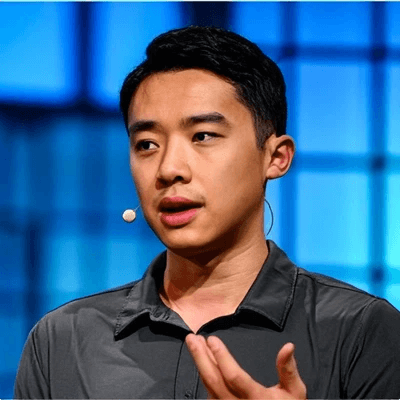
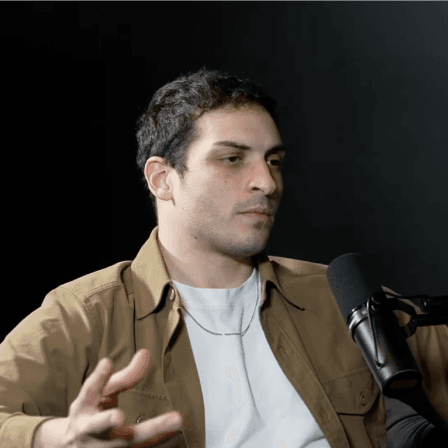
Manav: This is Renee, a physician-turned-entrepreneur who sold her first healthcare company for nine figures to Human. She's currently working on another AI healthcare startup, and her story is genuinely inspiring — she faced a lot of challenges along the way. Renee was a chief medical officer who essentially invented a whole category around facilitating house calls, and while running her company, she was also caregiving for her parents and giving birth to all her kids.
Her first company, Heal, played a crucial role in helping patients — even changing Medicare rules along the way. Their service let any patient get a house call and bill it under proper house-call codes. Heal was also the first company to offer real-time insurance eligibility checks, so patients knew their copay or deductible immediately when booking a house call. And no patient ever received a surprise bill from Heal. In this video, we'll learn the business model behind Renee's second healthcare startup, Together — and it's genuinely interesting, since she'll walk through how they're planning to monetize it.
Let's start from the beginning — can you give a quick introduction to the company, and what you're trying to achieve?
Renee: Sure, sure. I'll start by introducing myself — my name is Renee Dua, I was the founder of Heal and its former Chief Medical Officer. We sold Heal to Hint, and after that, Nick and I stepped away for a bit. Around that time, my father needed a very serious surgery, and I became a lot more involved in his day-to-day care. I'm a physician myself, but I found I was doing a lot of tasks that were genuinely time-consuming and honestly didn't need to be done by a human at all — making sure he got his refills, putting his appointments on the calendar, calling to schedule things. I kept thinking, why isn't software doing this? What's the holdup? This was about two years ago — we already had reasonably capable, if imperfect, models of intelligence and machine learning, so why weren't we incorporating those to actually help patients?
So Nick and I got back together and decided we wanted to build our second startup together — which is literally why we called it Together. We spent about two years in research and design, working with real users to simplify health-related tasks for aging Americans and their caregivers. They use the app to keep all their health tasks in a single place, use their phone's camera to check vitals, and talk into the Together app to check in on their mental health, getting a holistic picture of how their health is doing.
Manav: Wow, that's beautiful — congratulations on all your success so far, that sounds amazing. Who's the ideal customer for Together?
Renee: Anybody can use Together, but we really focused on aging Americans. When you download the app and register, the very first thing you're asked to do is scan your pill bottle — the app reads the medication name, when you take it, who prescribed it, which pharmacy you use, and starts building your health profile from there. Our first goal for aging Americans was to let them use pictures and voice to have Together auto-coordinate care during all the hours they're not sitting in front of their doctor — there are health tasks that still need to happen, and Together helps coordinate that.
Manav: How is AI specifically playing a role in this app — could this not have been built the traditional way?
Renee: We actually did pilot it the traditional way first, and economically, it just didn't make sense. We learned that once we incorporated intelligence and machine learning into the product, in three main ways I'll walk through, we were able to save real money and see meaningful results.
First, we surface prescriptive insights — "I know you take a certain blood pressure pill, I'm going to remind you to take it daily, remind you what it's for, call your pharmacy and arrange refills three days ahead of time, and I'll flag, since you have high blood pressure, have you had your kidneys checked recently? You're over 50, based on your birth date — have you had a colonoscopy, a mammogram?" We surface those to-dos, ensuring accurate, preventive care coordination.
Second, we use the phone's camera and rPPG technology — looking at blood vessels, fluid dynamics under the skin — to estimate blood pressure, oxygenation, heart rate variability, and pulse. That's genuinely exciting, because, say, if you're on blood pressure medication, you can see right away whether it's actually working for you.
Third, we use voice technology, listening to intonation patterns in someone's voice to help flag potential symptoms of anxiety or depression. All three of these use real intelligence under the hood.
What we learned from our pilots using intelligence in these three ways: we improved technical literacy — honestly, a lot of patients had no idea their smartphone could do this much, and everyone already has one. We improved health literacy, because people started understanding what medication they were taking and why, and felt gently nudged, almost like a daughter reminding them, to go get that mammogram or refill that prescription and stay adherent. We also improved Medicare Advantage Stars ratings, which really matters — CMS Stars ratings determine how these insurance plans get paid, and when patients stay compliant with appointments and medications, those insurers see real financial upside too. So those are the ways we've used AI in Together, and the results we were able to demonstrate from it.
Manav: Thank you for that. Can you quickly touch on the business model behind the app? You're solving a huge pain point, and it's actually reducing costs for the patient or the elderly person directly — can you talk about how the business model works?
Renee: Absolutely — Together is completely free for users and caregivers. We've never charged anyone using the service, and never charged their caregivers either. Our business model works on the back end: all fully de-identified, we accumulate a meaningful amount of data — trends in how a particular person is managing their blood pressure or blood sugar over time — and that data has real value. To be clear, we're never sharing any individual person's data, but the de-identified, trended data is genuinely valuable to pharmacy companies, pharma companies, and electronics companies that understand something like a TV could become a real health hub — a lot of this software runs on webOS. That data management and those trend insights are what we monetize.
Manav: Beautiful. What's the vision for what's coming next with Together — what are you building, what's the next big thing?
Renee: The most exciting thing we're building right now is what we call the Together Companion. Essentially, you can talk into the app and describe your symptoms or how you're feeling — "Together, I feel nauseated." It'll reply, "I see you have Zofran on your medication list, take it now, I'll check back in 30 minutes." "Together, I'm still nauseated." "No problem, I see you also have Compazine listed, take that now, I'll check back in 30 minutes." "Together, I'm still nauseated." And it'll say, "I know Dr. Smith prescribed these for you — would you like me to call Dr. Smith's office directly, or would you like me to point you to the nearest in-network urgent care or emergency room?"
So we're really enabling users to self-coordinate their care — I want to be very clear, we are not practicing medicine, and we are not replacing a doctor or their office. But there are hundreds of things patients can safely handle themselves when they're accurately informed. To build the Together Companion, we're working with closed, curated data sets — I'm a physician myself, and I work directly with our engineers to help model these responses, making sure they're never careless or nonsensical. We're very careful about how we respond to patients, and about making sure they know clearly when it's time to escalate to a real doctor — when there's nothing more we can safely add, and it's genuinely time to get real help.
Manav: Thank you for watching another episode of Emerging Tech with Manav. It genuinely fulfills me to make videos about entrepreneurs and technology impacting billions of lives. With that said, you guys need to check out my latest video on the flying boat by Navier — that was a really fun one to film.