Real Estate
Business

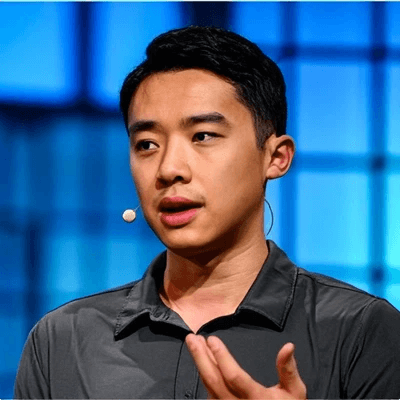
Ryan Begelman
Co-founder
,
Summit Series / ex-Bisnow Media
I Sold a Ski Resort To The Founder Of Netflix | $50M+ Exit
Ryan Begelman on growing Bisnow Media from $1M to $22M in revenue, selling for $51M, buying Powder Mountain, and co-leading Summit.
Transcript
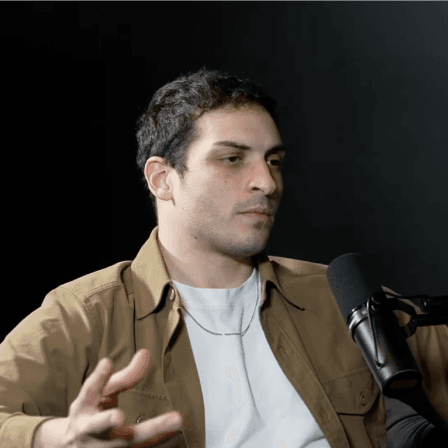
Manav: Jeff Bezos, Richard Branson, and Bill Clinton are just a few of the world-class leaders today's guest has brought to the stage at a conference he created called Summit. Our guest today is Ryan Begelman — a serial entrepreneur and currently an executive coach to a lot of famous entrepreneurs. Ryan grew Bisnow Media from $1 million to $20 million in revenue, leading it all the way to its acquisition. He didn't stop there — he and his partners actually bought an entire ski mountain in Utah called Powder Mountain, which was eventually acquired by Netflix founder Reed Hastings. In this conversation, he shares insights into what it takes to build businesses, and how he's living a very balanced life in harmony.
I'm excited to have you on the show, Ryan — how are you feeling today?
Ryan: I'm excited to be with you, man — good to finally hang out.
Manav: Looking in, my impression of you was someone who spent 10 to 15 years on this journey of high energy, being on stage, talking to hundreds of people — and now I feel like you're the guy who took a trip East, zened out a bit, went on this spiritual journey with yourself. Is that a fair characterization?
Ryan: Yeah, I guess. The reason I'm on the show, I suppose, is that I started a few companies and sold them, and I'm probably most known for this crazy acquisition of a ski resort — a 10,000-acre mountain in Utah — with my business partners back in 2012, which about eight or nine years later we sold to Reed Hastings, the founder of Netflix. In a lot of ways, though, the thing I'm most proud of is actually building another company, Bisnow, which became the largest publisher of commercial real estate news and ran hundreds of commercial real estate conferences for executives.
At the same time, I ran Summit, which is a pretty progressive, liberal ideas festival — basically a three-day immersive experience for thousands of entrepreneurs, artists, academics, held once or twice a year, where people pay about $5,000 for a ticket. It's done a lot of good, spread a lot of ideas.
But I got really interested in philosophy back in junior high, thanks to my English teacher, who was wonderful — that planted the seed. Then I discovered Buddhism in my early-to-mid twenties and got really excited about it — the idea that you can control your mind, even if you can't control your external circumstances, and that you have real agency over your own wellbeing, your happiness, your perspective. That was genuinely healing and exciting to my young mind. I'm 42 now, but from about 24 until roughly 39, I was basically obsessed with Buddhist philosophy and daily Buddhist practice. I learned a huge amount from that — how to be equanimous, how to be disciplined, able to self-regulate my emotions quickly, able to return quickly from an emotional state back to a calm, present one. That was really valuable, both as a husband and as a CEO under constant stress and pressure — your team wants consistency, they don't want you being erratic all the time.
Manav: I grew up in India — spent 21 years of my life there — so I've experienced both sides. I've seen entrepreneurs and the work culture in India, and I've experienced the work culture here in the US, and it's very different. I've seen a lot more cases of substance abuse in the US, people relying on caffeine, stimulants, this constant stress bubble they're living in — moderation just isn't really there, especially with entrepreneurs. There's always this sense of urgency, high IQ but not necessarily high EQ, and, like you said, they're not able to self-regulate and come back to a neutral state of mind. How do you actually build that ability — does it come with experience, or from reading philosophy? How do you self-regulate?
Ryan: Good question. I think it starts with slowing down, taking a moment to breathe, and sinking into the chest, the solar plexus, the stomach, and of course the legs and feet — there's a lot of information running through this whole nervous-system network across our body. To me, the body is like an extended brain — I think of it almost like a Google Drive, where we store a lot of data, and the mind is more like the CPU, where we process that data. Both matter enormously.
As you mentioned, I coach entrepreneurs now, and I'm always trying to help them slow down enough to learn how to actually feel — which is a skill you can develop. We've generally been taught not to track our own emotions, and especially not to track other people's. When you're a child, your parents usually don't want you noticing that they're angry or upset, so you just learn not to notice or track that at all. Even right now, I feel a little anxious being on this show — and I can ask myself, okay, what's that like for my heart, for my chest, for my mind? Through that kind of noticing, you can become more regulated over time.
Manav: Early in a career, the advice you often hear is: you've got to be obsessed with what you're building — forget your wife, forget your kids, forget your friends, just lock yourself in a room and work, that kind of thing. Is that okay, or is that going to traumatize you for the rest of your life?
Ryan: I think, on one end, I don't want people to feel like a project — like they're this object that needs constant working on, mental health, physical health, all of it, all the time. What I've discovered is that the psyche is a multiplicity. The parts of my multiplicity that are young, playful, curious, connected to nature, to the earth — they generally don't want to be stuck in the dust grinding all the time. That said, I have other parts of my personality that genuinely love to grind, love to work hard, love to make money, and I think that's wonderful too. That kind of energy, especially when you're younger, and sometimes even later depending on the person, is great — find outlets for it, find places to go be obsessive and work hard. Hard work matters. I worked extremely hard through school, through my twenties and thirties, and now I work a lot less — and honestly, I sometimes miss the grind and the hustle, having people around, being in it. I might return to some of that.
For me, a lot of life is just "both, and," not "either, or." I don't pretend to know how other people should live their lives, but for me personally, I need to spend real time with family and friends — and then there are other stretches where I go on sprints and have to set boundaries with family and friends, say, "I just don't have space right now, except maybe dinner each night and an hour after, because I'm on a sprint." There are seasons to things, and it takes some nuance and balance — at least that's how I think about it for myself, and it seems to work well for my clients too.
Manav: We've seen this pattern with podcasts and newsletters — once you land a big guest, it creates an inflection point. Like Tim Ferriss's podcast was pretty stagnant for three years, then he landed Arnold Schwarzenegger and it took off, then he landed Jamie Foxx and it took off again. For Summit, how were you able to land big guests — was it through personal connections, or cold outreach?
Ryan: It's funny — I'd say one real inflection point for us was having Bill Clinton keynote Summit in 2010. But if I rewind about 24 months before that, my co-founder Elliott was cold-calling Mark Zuckerberg, the founder of Guitar Hero, the founder of YouTube, all these people. Most of them either didn't take his call, didn't call him back, or said "maybe" or "no" — but 19 people said yes, and those 19 came on our first ski trip. Because they loved it, they said, "we'd like to invite friends to the next one." So now you're working with this powerful network of 19 people, each of whom knows other powerful, interesting people. Once we'd built trust with them, they helped bring those people to our Mexico Summit about four or five months later — we had 85 people at that one.
Then Dustin Moskovitz, co-founder of Facebook, came; Chamath Palihapitiya, who was early at Facebook and had worked at Google, came — because they were friends with some of the original 19. Those people then invited their friends to our Aspen Summit, where we had 140 people. One of the people who came to Aspen had helped create the visual identity for the Obama campaign — the "Hope" logo, that whole movement. So when Obama took office, through that connection, we were able to get a meeting with people in his new administration — for the folks at Summit, that essentially gave us a blank check to call people who'd previously turned us down or been unreachable and say, "hey, do you want to come meet the new White House team, here are 20 amazing people who've already said yes." Now there's social proof, so people said yes because of that.
Someone in Bill Clinton's office in Harlem at the time heard that we'd connected with Obama's new head of social media — a role that had never existed before — and the Clinton Foundation thought, this is interesting, we want to connect with entrepreneurs, since we have initiatives entrepreneurs could plug into. That's how we ended up having a special dinner with Bill Clinton. He liked it, and we said, why don't you come to one of our bigger events, where you can have a much bigger impact and meet more entrepreneurs. Once we had his name to bring to market — "we're doing an even bigger event with Bill Clinton keynoting" — which at the time was probably even more relevant than it is now, we went from a couple hundred attendees to 750.
Then we announced we'd be doing Summit at Sea — taking people to a destination on a cruise ship. Nobody had really done anything like that before, so that wasn't about landing a specific person, it was more, "hey, we're going to do something crazy." We got really good at playing that game of delivering real value — obviously, if the experience isn't awesome and great, people don't come back and don't help you build the next inroad. We kept building inroads into new communities — the music industry, the entrepreneur communities in Europe, in Tel Aviv, in Dubai — and each of those nodes has its own network of friends. I think leveraging a big name works because a lot of people just think, "I want to see Bill Clinton live" — and other people who also want to see Bill Clinton live are probably interesting people I'd get along with too, because we're curious about the same things. They're my people.
Manav: Thank you so much, Ryan, for coming on the show — I really appreciate your time, so many good lessons in this episode. How can people find you — what platform are you active on?
Ryan: It's Ryan Begelman, my name dot com — you can email me there. I love having coaching clients — I'm usually somewhat full, but I always try to make room for new ones. I coach all kinds of people, you don't have to be an entrepreneur, though I do tend to work more with entrepreneurs, partly because it's a real financial investment to work with me. I love supporting people through their journey, their growth, building things, career transitions, whatever it might be. If I can be helpful to more people, that's great — that's why I come on podcasts and try to share some of the lessons from my own life.
Manav: Wishing you all the best, and thank you for coming on, Ryan.