Business

Elizabeth Yin
Co-founder & General Partner
,
Hustle Fund
I Left My Six Figure Job At Google To Invest In Startups!
Elizabeth Yin, co-founder and GP at Hustle Fund, on leaving Google, running 500 Startups, and investing pre-seed in 500+ software companies.
Transcript
Manav: Elizabeth, your firm's done around 500 investments.
Elizabeth: That's right.
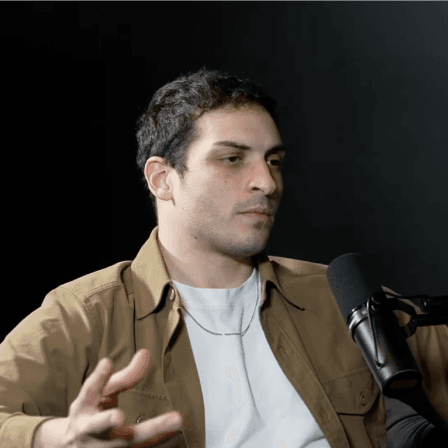
Manav: Pre-seed, three funds in, you just raised a fund, $46 million. In today's episode I had the opportunity to talk to Elizabeth Yin — she's the co-founder and general partner at Hustle Fund. They invest in early-stage companies and have led pre-seed rounds for companies like Webflow, NerdWallet, and Boom. Earlier in her career, Elizabeth was a founder herself, launching an adtech company called LaunchBit, which was acquired in 2014 by BuySellAds. I learned a lot in this episode — Elizabeth walked me through the journey of launching her own company, scaling it, and what problem she was solving. I hope you find some value in this video.
I'm really excited and happy to have you on the show, Elizabeth — how are you doing today?
Elizabeth: Thank you so much, Manav, it's so great to be here.
Manav: The coolest thing I saw on your LinkedIn was this three-year gap where you just tried a bunch of things — you said something like "I tried many things, I learned a lot of lessons." I had a similar experience myself. Can you go back to your early days and tell me the founding story of LaunchBit?
Elizabeth: Sure. I left my cushy job at Google in late 2008 — I'd grown up around here, and I always knew I wanted to start a company. Unfortunately, when I left, I had absolutely no idea how to actually start one. So I went through a series of meanderings and lessons over the next couple of years. Things are so much more accessible now, knowledge-wise — back then, almost nobody was blogging about this, there were no videos on how to think about starting a company. Today, every startup founder I meet already knows about product-market fit, minimum viable products, how to de-risk an idea — you can be anywhere in the world and learn these concepts. Back then, these concepts basically didn't exist yet in any codified way.
The path to LaunchBit came out of those first couple of years after leaving Google, where I was just trying a lot of things, mostly learning customer acquisition — I was largely an affiliate marketer at the time. What I realized is that being an affiliate marketer is actually quite hard, and ad channels get saturated fast — but one channel that wasn't very saturated, and I still believe this today, is email marketing. If you have a genuinely compelling email strategy and messaging, it can be extremely effective.
That was the genesis for LaunchBit. By that point I had so many friends who were marketers, myself included — people doing affiliate marketing, selling all kinds of products — and many of them were finding the most success with email marketing. But the issue with email marketing is you're either limited to your own subscriber list, or if you want to do cross-promotions with other people, there's a ton of manual work — say I want to partner with your newsletter, or someone else's blog list, there's a lot of manual outreach and campaign setup, and it's slow. LaunchBit was a platform to solve that — helping newsletters cross-promote with each other, and helping products get placed into newsletters more easily, at scale. Essentially, an ad network for email.
Manav: What was the takeaway from LaunchBit — were you happy with how the company got acquired, and when did you know you wanted to become an investor?
Elizabeth: We were acquired in 2014 by a company called BuySellAds, which owns a number of different ad properties and ad networks — they ended up doing even better than we did. Our exit was a relatively modest one, honestly, and part of why we took it was that it had gotten really, really challenging to keep helping our newsletter partners grow their lists — we were starting to feel real stagnation on growth, and it felt like a good time to take the exit.
As for when I knew I wanted to become an investor — that didn't happen until much later. Right after the acquisition, once we'd transitioned everything to BuySellAds, I started mentoring other startups and doing some angel investing in friends' companies. Initially it was really just to help other entrepreneurs avoid some of the mistakes I'd made, especially the very obvious ones from those first couple of years — I made so many mistakes. Eventually the mentoring kind of went into overdrive, and I ended up going to 500 Startups' accelerator program — the same program I'd gone through myself with LaunchBit, so I already knew the ropes — and I got pulled in more and more, ending up running their accelerator program for almost three years.
Initially I wanted to do all that mentoring and angel investing just to learn what kinds of businesses people were building at that point — this was around early 2015 — and there were all these new things coming up that I didn't know much about, cryptocurrency, drones, AR/VR, because I'd been so heads-down building my ads company. I wanted to learn by mentoring other startups and understanding what opportunities were out there — I was actually exploring ideas for a future company, thinking about taking another swing at building something myself.
But then I realized the problem I was actually most passionate about solving — and this time I wanted something I could build for 20, 30 years or longer — was helping founders, specifically through capital, knowledge, and networks. Those are the core needs of early-stage founders, especially first-time founders. Hustle Fund ended up being that company. I didn't end up starting a crypto company, or a drone company, or a VR company — I was exploring ideas to start a new company, I wasn't originally exploring becoming a VC.
Manav: I worked at a small accelerator myself, much smaller — reviewed maybe 200 pitch decks while I was there. I read somewhere that you've reviewed 20,000 pitch decks over your career.
Elizabeth: [laughs] I think, personally, it's genuinely a lot of fun getting to read and learn about so many different concepts and businesses.
Manav: The biggest question I want to ask — I know investors these days have basically the attention span of TikTok users, nobody's really reading an entire pitch deck. How can I get an investor's attention fast?
Elizabeth: I'll be very upfront and transparent — when I look at a pitch deck, I probably spend no more than 30 seconds on it.
Manav: Wow.
Elizabeth: Some people ask, "how can you possibly make a decision in 30 seconds?" And the answer is, you can't — you're not deciding whether to invest, you're deciding whether to take the meeting and spend the next half hour to an hour with somebody.
Manav: So specifically, what are you looking for in those 30 seconds?
Elizabeth: Really just two things — everything else, I'll learn about in the conversation. One is the team's background, which I'll get to. Two is the specific problem they're trying to solve. Honestly, the problem matters more to me than the team, because these days almost every idea is pretty crowded — for a lot of ideas I see, there might be 20 to 50 companies doing basically the same thing at pre-seed. In those crowded spaces, we tend to just pass, because a competitive space by definition means customer acquisition costs go up — you're fighting for the same mindshare, so it gets more expensive to acquire customers regardless of channel. With paid ads, obviously bids go up, but even with email marketing, if you're sending an email and 20 other companies are sending similar emails, the sales cycle gets longer and more expensive too. So we tend to avoid highly competitive spaces.
What I'm really looking for in the idea and problem space is: is this genuinely differentiated? If not, we'll just pass. If it is, then I'm interested, and I look at the team — do they have real background in this space, how did they arrive at this specific idea? That's why the team slide matters so much — it tells you whether this is the right group of people for this particular idea. I think the thing people don't talk about enough is what I call "founder-market fit" — the term gets thrown around a bit, but I think it's genuinely crucial, because you can have great founders who were excellent at building one company, but who wouldn't necessarily be the right team for some completely different idea they know nothing about. You want the best-fit team for that specific idea — that's the second thing I look for in the deck, and it only takes a few seconds.
Manav: It's funny, I was watching a talk you gave at Hustle Con maybe seven years ago, and you said something about passion that got the whole crowd laughing, and I actually relate to it — a lot of the time in life, you don't really know, you're just going down a path. How do you think about that — should you always be looking for a problem to solve when starting a business, or how do you justify deciding, "I'm going to devote the next three years to AI and really go deep in that space"?
Elizabeth: I don't think there's one right path, but I think being self-aware about what you actually want is really important. Some founders are solving a particular problem because it hit them personally — maybe they faced it at a prior employer, or, especially in health, something happened to a loved one, and they went down that whole rabbit hole. That's one group — people who start a company because of a very specific problem they'd otherwise never have thought to start a company around, but they care deeply about solving it. That's a group we back a lot, because we know their commitment to the problem is very high.
Then there's another group where it's more, "I really want to work with this co-founder, I really want to work with this specific group of people" — they care less about the specific problem and more about the team and the culture they're building. That's where you tend to see more idea-hopping. That's not necessarily bad — founders need to know when to pivot — but you obviously don't want to jump around too much before extracting any real learnings either. Ideally, you run an experiment, learn from it, iterate, and maybe eventually pivot from there, rather than making wild leaps into things you have zero learnings on.
Manav: For people interested in pitching Hustle Fund, how can they get in touch — is it a simple application process on the website, how do you prefer companies to approach you?
Elizabeth: We take all pitches through our website, hustlefund.vc, and we look at everything and get back to everybody. There's always this question of "where's my application actually going, is it disappearing into a black hole" — the answer is, we genuinely look at everything, and even if you know someone on the team, we still ask you to submit through the same process, because it helps us review everyone's materials comprehensively, with the same context — your deck, your name, what valuation you're targeting, where you're based, where you're incorporated. That's the information we need, and we go from there.
Manav: Amazing. How can people find you, and read what you've written online?
Elizabeth: I'm pretty active on Twitter, my handle is @dunkhippo33, and my blog is Elizabeth Yin's blog — I haven't been posting long-form as much the last few years, but on Twitter I write a lot of tweet threads, which are basically mini blog posts that get to the point faster.
Manav: Thank you so much, Elizabeth, I know you must be really busy, I really appreciate you coming on the show. Guys, if you have a company, go to hustlefund.vc and submit your application today — they get back to you really fast, and they respond to every single application. Thank you so much, Elizabeth — I hope to do a recap with you in a year or two and see where our journeys have brought us.
Elizabeth: Thank you so much, Manav, I appreciate it.
Manav: If you're new to this channel, please hit that subscribe button — I want to get this video in front of more and more founders and aspiring entrepreneurs, because that helps my mission of educating more people and supporting their journey. Thank you so much for watching.