Tech
Business

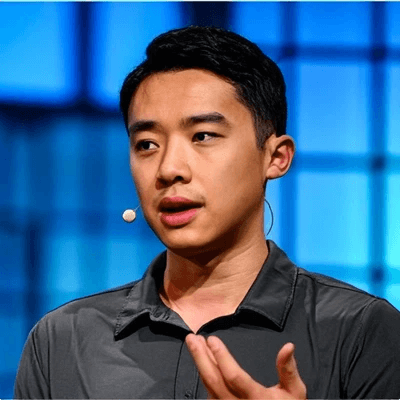
Emily Richardson
GEO Expert & Founder
,
KNWN.app
How To Rank Your Business On ChatGPT | GEO MasterClass
GEO expert Emily Richardson on how businesses can rank on ChatGPT and what generative engine optimization really takes.
Transcript
Manav: This is an interview with Emily Richardson. She's a GEO expert who helps businesses rank on ChatGPT. In this episode, Emily gave a whole bunch of suggestions on how to rank on ChatGPT, and made some bold predictions. I got a lot out of this episode, and I hope you will too. Comment the word GEO below so I can send you a free guide on how to rank on ChatGPT. I hope you enjoyed this episode — I'll see you in the next one. Emily, what will people get out of this episode?
Emily: Great, yeah, thank you so much for having me on. By the end of this podcast, ideally the viewer will understand the differences between GEO and SEO, and how to help their business show up on AI search.
Manav: Awesome. Can we start with what GEO and AEO are?
Emily: Great question. Just to preface with those two acronyms: GEO is generative engine optimization, AEO is answer engine optimization. There are other ones too — LLMEO, all these different acronyms being used. Personally, I like to stick with either GEO or AEO. It's basically the practice of optimizing your brand's owned and earned content in order to show up better on AI search. It's different from SEO specifically because search engine optimization is primarily a product of Google's search engine — that helps you show up on Google. Answer engine optimization helps you show up on AI search.
Manav: Can you explain a bit more about what sources ChatGPT was trained on? Because that's evolved a lot, right, since multiple models have been trained on different sources. Can you touch on what sources they were trained on initially?
Emily: Good question. I'd say the training in general for a lot of these models is the entirety of the internet. So there are two elements: training the model, where they're looking at the entire internet and digesting as much content as possible, and then their searching capabilities. AI search came out around January, when ChatGPT released a live search function. Specifically, they look at different sources — the top ones being Reddit, Wikipedia, industry news sources like Forbes, and video content providers like YouTube. Those are the top-ranked and most-used sources you can use to help show up better on AI search.
Manav: And how does GEO differ from traditional SEO, or is it very similar?
Emily: We like to say traditional SEO is the foundation for good GEO. Having strong SEO sets you up for success. At their core, for both SEO and AEO/GEO, you need to understand what your audience is asking and answer those questions directly. I'd say the biggest difference is the format in which the answers are presented. For Google, you want to rank first or second on the search engine results page. For answer engines, you want to be part of the answer — whether your brand is mentioned directly, or cited as a source. So the format of the answer is very different between Google and AI search, and the priorities are different too: for Google you want to rank in the list, for AI search you want to show up in the summary.
To rank on Google, it primarily looks at keywords — it's keyword-driven, plus backlinks. Google's bots travel through backlinks. They break your query down into a keyword. Google search queries are often around four words, whereas AI search queries are around 23 to 28 words. Google breaks the search into keywords, searches its index, and brings back that specific link. For AI search specifically, you're asking something like a 23-word question. It breaks that down into multiple sub-queries. ChatGPT searches Bing and other non-Google indexes. Gemini, of course, searches Google, since it's a Google property. Other AIs search other non-Google indexes as well. So it takes those queries, runs them as a Google or Bing search, and looks for the answer. I like to say AI bots read with math, whereas Google bots read for keywords. So when you're optimizing for an AI bot, you want to make sure you're optimizing for the queries that might be asked in AI search, so it finds your content and uses it to inform the answer.
Manav: Okay. So if I'm a business owner who's relied on traditional SEO to drive traffic to my restaurant, or for any kind of service, what are some very simple steps I can take today to move one inch toward GEO?
Emily: Good question. I'd say the first thing you can do is understand the questions your audience might be asking — the longer-tail queries. Let's say you're a water bottle brand and you want to start showing up in AI search. Make sure you're not just looking at keywords like "water bottle" or "travel water bottle" — those are for Google. You want to make sure you're answering longer-tail queries on your website: what is the best water bottle for traveling, what is the best water bottle for school, all the different questions people might ask AI search. Make sure you're answering those clearly on your website. That's a great first place to start.
Manav: Okay, so essentially, whatever blogs they've already written — are they supposed to rewrite them, or do they need to create new ones?
Emily: Good question. For the blogs they currently have, they can ideally stay as is — you might want to update the date. AI loves recency; it doesn't like to cite things that are too old. So make sure your blogs are updated, and check that they're being indexed on Google and Bing, because if they're not indexed, they won't show up in AI search anyway. Go through and scrub that on your website and blog content.
As you're creating new blog content, here are a few things to focus on. First, make sure your title is in the format of a longer question, or a very clear answer — something like "What are the best travel water bottles" or "Why this brand is the best travel water bottle." Under that, you want a summary of everything on the page. AI bots are very lazy — they don't like to read, and they don't like skyscraper content at all. They'll actually leave a page if it doesn't give them the answer in a short enough time frame. So directly under the title, add a summary. Under that, add some bullets — AI search really likes small snippets it can pull and parse quickly, so as many small, quotable sections as possible is ideal. And finally, end with an FAQ section. Again, this is about optimizing for queries instead of keywords. Google, you optimize for keywords; AI search, you optimize for queries. Having that question-and-answer format, plus an FAQ, on every blog post and page will help you show up.
Manav: And what about word count — and can they use em dashes on their blogs?
Emily: Em dashes are fine. Sam Altman actually just came out with the release of ChatGPT 5.1 — you can finally instruct it to say no em dashes, and it will listen. So you can take that hint and remove them, but in general, go ahead. I actually have that in my custom instructions in ChatGPT settings — to never use em dashes — and it works.
Manav: It works? Okay. It has to work for me, but Sam Altman literally said yesterday that the instruction finally works, since 5.1 is apparently better at following instructions now. So I'm excited.
Emily: Awesome.
Manav: So apart from blogs, what else can people do? I've also noticed in the last year that TikTok and Instagram videos are ranking now for businesses — they used to not rank on Google, and now they do. How can people incorporate video and other content to rank?
Emily: Yes, that's a very good point. Instagram is now being indexed on Google, and TikToks are able to surface in AI search content as well. If you're looking to do video content, YouTube is going to be the number one source to start with. This is primarily because Gemini, and even AI Overviews, really favor multimodal content. So if you have a YouTube video, that's the first place I tell people to start posting video content. And even if you're a B2B SaaS company, you're not going for views — you're going for AI bot scrapes. So put up demo videos, videos answering user questions. It can be extremely dull, extremely boring — the point isn't to have human viewers, it's to have AI bot visitors. That video content becomes a lead magnet for AI.
Manav: Okay, can you talk a bit about backlinks and how to be a trusted source on ChatGPT, and keep that ranking going long-term?
Emily: Sure. Backlinks are very popular in SEO — that's how Google searches the web, traveling through links. If you're linked in something like Forbes or a large industry news source, that gains you more authority and trust in Google's eyes. It's kind of a sign-off — "hey, this is a viable option." For AI search, there's no such thing as a backlink. AI bots aren't crawling the web using links — they're crawling using mentions and mathematical patterns. So it's no longer just about link quality, it's about citation and mention quality. You don't even have to be linked in something like Forbes — if your brand is mentioned, even just the name, that counts for something in AI search. This is where digital PR is starting to emerge as a strong source for AI search — AI systems treat mentions similarly to backlinks. You want your brand mentioned across trusted industry news sources in your space, and on as many Reddit threads as possible. If you have a Wikipedia page, that's a great start. The more places you're mentioned across the internet, the better — and it doesn't have to be a link, which is actually an advantage, especially from a PR angle. Just being mentioned within different news sources is great.
Manav: With traditional SEO, it was really easy to track how keywords were ranking, and you could pay to rank for those keywords. But with GEO, OpenAI doesn't really have infrastructure for that, right, to track it? So how do you test whether it's working or not?
Emily: Great question. This gets at the core difference between Google and AI search: Google is deterministic, AI search is probabilistic. Google being deterministic means you can look at specific keywords and see where you rank for them, and that ranking doesn't change much. You might be fourth; put in work, maybe you're fifth — it doesn't swing wildly search by search. For AI search, because it's probabilistic, the answers aren't the same over time. There was a study by Ahrefs that showed the semantics of the answer itself don't really change — what the answer says stays fairly consistent — but the citations change: where it's pulling the answer from, and what it mentions within that answer, changes quite quickly.
So when we're measuring over time, since OpenAI doesn't have a dashboard like Google's — and as far as I know, it's not in their plans to build one — the way to peek behind the curtain is through visibility and brand-tracking tools, like the one we've built at Known, and others like Profound have similar capabilities. We're calling OpenAI's API — the Completions API — and gathering and scraping answers from key queries constantly. That lets us understand the changes over time, and where your brand sits over time. We run queries constantly and compare them to a baseline of where the answer originally was, accounting for possible changes, and we're able to track whether you're still showing up, whether you're showing up for a different query, and where you're mentioned. So instead of tracking a rank, we're tracking your position within the answer. Say I'm asking for a listicle of best travel water bottles — I might see that a given brand is tenth, or not showing up at all. I'll run that query ten or twenty times, see where the brand shows up, track how that changes, and take the average.
Manav: I think OpenAI will release a dashboard — that's my prediction. Before we talk about Known, I want to put you on the spot and get your hot take on the future of this market. Where is this going? We've got Grok, DeepSeek, ChatGPT, Gemini — ChatGPT is winning the race with 7 to 800 million weekly active users and growing. What's your prediction on where this is going, say, early 2026?
Emily: Early 2026, I think it's going to be a race for monetization. All these companies are trying to figure out how to monetize search. OpenAI is collapsing the marketing funnel — their goal is to take a consumer from awareness all the way to purchase, all within their own property. They're doing this by integrating with Shopify, Etsy, and Stripe, so you can check out directly within ChatGPT, making that a seamless process. Companies like Google and Gemini are also well set up to do this — Google has focused on Shopping for a long time, and I know they're looking at ads too. So Google might take the ads route, while OpenAI takes a cut of purchases.
For Perplexity and Grok, I think that'll just keep playing out. They're all getting into the browser game, and I think whoever owns the browser space is going to own the purchase and search element — similar to how Chrome is the browser for Google. Perplexity now has Comet, and ChatGPT now has Atlas as well. That's moving quickly. The next step, alongside search, is what I'd call phase one of AI — chatbots have been the main way we've interfaced with AI as a society for the past two years. As we move further into 2026, I think it's going to be agents. That agentic-browser element is going to become more popular — people giving agents their credit card and information to do tasks for them. I believe that's the next step in how we interface with AI.
Manav: I've played around with the browsers a lot, Atlas and Comet. Comet is especially much better than Atlas from what I've experienced, and I'm pretty bullish on browsers, pretty bearish on apps overall. I think apps will see a decline more and more, and companies with strong databases, like Zillow, will win because they have that data powerhouse in the back. Let's do a short video real quick — I'll start by saying, "Emily, what are the five tips for a business owner?" and you can give five, in about 60 seconds.
Emily: Okay, great. Emily, what are five steps to rank on ChatGPT today?
Number one: make sure you're formatting your on-site content for readability. AI search reads with math, so keep short paragraphs, clear section headers, and show AI that your content is readable.
Number two: make sure you have Q&A blocks, comparison tables, and summaries — things that are easily skimmable and readable by AI search. This is for your on-site content.
Number three: create citation-worthy content. Publish original research, benchmarks, and data on your site that's unique. Market research or desk research you do yourself is valuable — AI can generate a lot of generic content itself, so make sure it's looking to you for anything unique.
For off-site, two things: make sure you're appearing on high-authority domains that AI search pulls from — industry news sources, Reddit, YouTube, Wikipedia. You don't have to be linked, just mentioned. And finally, study where your consumers are hanging out, what user-generated content they're engaging with — Reddit, social, forums — and make sure you're active on those forums, getting your brand heard.
Did you know the average visitor from AI search is worth 4.4 times more than a visitor from Google search?
Manav: What? No, I did not know that.
Emily: It's true. We're seeing that people who come in from places like ChatGPT and Perplexity are more qualified leads. They've already done research on the business, and they actually trust ChatGPT's recommendations more than Google's. So once they click through on the answer they get, they're 4.4 times more likely to convert to a purchase, or a sales-qualified lead, than someone coming in from Google.
Manav: Why do you think that is?
Emily: I think it comes down to trust — people trust AI search more than Google search now. I think Google devalued their own search once they really leaned into ads and brought in a lot of Google properties, which lessened the value of a Google search for a lot of people. With ChatGPT, the experience feels personalized directly to them, and people trust the answers coming out of it — they feel guided and personalized. So when they finally make a purchase decision, they feel good about it. All their questions have been answered. And when they do come to your website from ChatGPT, we've found the conversion rate is a lot stronger — 4.4 times stronger.
Manav: Emily, what was the inception of the idea for Known? And what exactly is the service you're providing right now?
Emily: ChatGPT came out with live search in January of 2025, and ever since then, brands have started clueing into wanting to show up in AI search — they want to figure out how to influence that answer in some way. That's where Known came from. My background is in marketing — I was working at a marketing startup before Known, and a lot of our clients were asking how they could show up in AI search, because we were kind of the AI authority for those marketers. So we built Known as a way for them to track their visibility — basically, a way for us to show them that the effort we were putting into helping them show up in AI search was actually working.
On Known, you get an AI visibility score that shows how well you're showing up. You get to understand your citations, which I think is extremely important for off-site content — when your brand is mentioned in AI search, where is it pulling that content from? Your website? A blog? Some brands have been surprised by where AI search pulls from — some disappointed, some excited — but they get that window into what's being cited.
We also show trending queries. We don't have a direct view into exactly what people are asking in AI search, but we found a way to simulate the queries people are most likely asking, because AI search funnels these long-tail queries through Google and Bing, and we're able to catch them there. That gives you a clear list of the queries most popular in your industry, so you know what questions to answer on your website to show up more in AI search.
We also show your gaps compared to competitors. AI search is an extremely competitive space — if you've done a ChatGPT search, you'll notice it often doesn't give you just one answer, it gives you multiple options to choose from. So you're up against your competitors more than most people realize. We have an opportunities map that shows how you can get ahead of specific competitors on specific queries.
We also let you track visitors — which pieces of content are getting clicked on most when people come through ChatGPT. Even though it's a low click-through rate, it signals which pages are doing well and which aren't, and shows you that conversion too. With that whole package, you can understand your on-site and off-site visibility and work to improve it. We're also coming out with more features in December, focused especially on competitor comparison, since this really is a competitor-focused space.
Manav: Awesome. A lot of people watching might be wondering — is this a SaaS service? Can you talk about the pricing model, and how much it costs for businesses?
Emily: Known costs $20 a month for one website. If you want to add other websites, or you're an agency, or you want to track your competitors, three websites is $49 a month, and it goes up about $20 per website from there. It's a B2B SaaS, monthly subscription model, and we hope it's reasonable and approachable for businesses to get a read on how they're appearing in AI search.
Manav: Wow, that's really affordable. I don't know why I assumed it would be a lot more expensive than that.
Emily: Dual Web is more expensive.
Manav: Okay, let's talk about Dual Web. What's the service there?
Emily: For Dual Web, we're the first company to figure out a way to bifurcate web traffic — sending humans and Google to your original website, and sending AI bots to an AI-optimized version. We split the traffic: humans and Google see your normal website, and AI bots see a mathematically optimized version in clean, semantic HTML that's easier to parse and cite. That version loads in 10 milliseconds, has 33% greater accuracy, and you end up being mentioned within the answer 2.3 times more often than if AI were parsing and summarizing your traditional website.
Manav: And how does that work — is it a different link altogether, or is it the same link with a different robots.txt setup or something?
Emily: It's a different link. We redirect to a secondary domain, but that domain isn't indexed on Google, and humans can't enter it. So there's no duplication risk that would hurt your SEO — it doesn't touch your SEO at all, which is actually a positive, because a lot of people reformat their blogs or change their content for AI optimization and end up hurting their SEO in the process. So if you want your SEO to stay stable while you optimize for AI search too, Dual Web is a good option.
Manav: This might be a strange question, but how does it know if it's a human or a bot?
Emily: OpenAI, Perplexity, and Claude have to announce when their bots enter — I'm not sure if it's a legal requirement, but they do identify themselves, like OAI-SearchBot, ClaudeBot, and so on. We're able to track when that's the case and redirect from there.
Manav: Interesting. I think that's part of why they were getting sued by outlets like The Wall Street Journal and other big publications.
Emily: Yes, exactly.
Manav: Because they were scraping those services without permission.
Emily: Yes. Perplexity specifically is known for doing things in a pretty shady way.
Manav: Good to know. So how can people use your service, and how can they ask you more questions if they want to learn more?
Emily: For Known, it's a simple self-service sign-up — you can go to our website, known.app, no "the" or extra letters. From there you'll also see a link to Dual Web. If you Google Dual Web, we'll show up there too. For Dual Web, you can book a meeting with us — we're specifically working with companies that already have strong SEO, around 100 pages on their site, and want it fully optimized for AI search too. If that fits, feel free to book a meeting on the Dual Web website. For analytics, it's on known.app.
Manav: And everyone, if you have more questions, go find Emily Richardson on LinkedIn — is that right?
Emily: Emily Richardson, yes.
Manav: Awesome. Thank you, Emily, for coming on the show and giving us a lot of good tips about GEO and AEO. This has been a pleasure — thank you.