Consumer
Tech

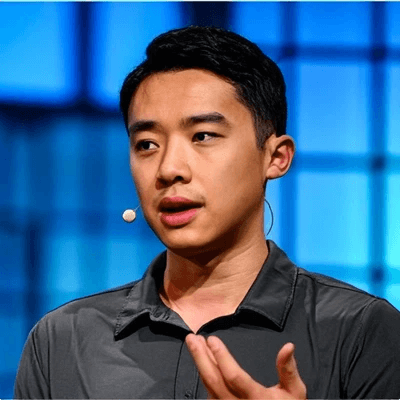
Po-Shen Loh
Professor & Founder
,
Carnegie Mellon University / Live
How This Entrepreneur Is Teaching Math Through Actors | Carnegie Mellon University Po-Shen Loh
Po-Shen Loh, Carnegie Mellon professor and former USA Math Olympiad coach, on teaching math through professional actors and building Expii and NOVID.
Transcript
Manav: All right everyone, today we have Po-Shen Loh on our show, and we're going to be talking to Po about a lot of interesting subjects. I'm really excited to have you on the show — how are you doing today, Po?
Po-Shen: Great, great, nice to meet you.
Manav: Po is one of those rare, interesting people I always wanted to meet, because you're not just an academic — you've been a social entrepreneur, you've given the largest solo math tour in history, you've won a lot of competitions. But I want to start with the solo math tour you did in 2021, because for me that was one of the coolest, rarest things you've done — touring across the US teaching people during COVID. Can you tell me about that experience?
Po-Shen: Sure, sure. That was really fun. For ten years I was the national coach of the US International Math Olympiad team, and during that time I'd travel around giving a lot of talks, because people wanted to learn about math. But during COVID, I obviously couldn't travel and give talks, so I got itchy.
I was recording something in New York in May 2021 — a studio had flown me out because they had this idea that you could use professional equipment to record math lessons. I thought that was cool, but while I was out there, I noticed people were starting to go out again, restaurants were full, and I thought, maybe I can start giving talks again, as long as I make sure I'm not creating super-spreader events.
Then I got this idea: there are parks outside, parks have shelters — in America we've got parks with picnic shelters everywhere. What if I just went city to city, like a band, set up my own speakers outside, and gave talks in parks? I told some people, and they said there's no way this works — how are you going to carry all the equipment solo, how will anyone even show up? I said, challenge accepted — if you tell me something's not possible, I'm going to try it. I went to music stores, pro audio shops, bought PA speakers, and just went for it.
It was an amazing experience, because right after COVID, everyone had been pent up at home, and I'd roll into a city and just announce, "hey, anyone who wants to learn about learning, I'm happy to give a talk." It brought all these math-curious, learning-curious people out of the woodwork, city by city. It was remarkable, going from park to park to park, driving off into the sunset from one city to the next, seeing all this humanity — and that's actually where I got the seed of the idea for the next big thing I built.
Manav: Can you talk about your first company, and how many years it's been in the making?
Po-Shen: I have one company — my first and only company — called Expii. I started it with this idea: what if you could build a website where people contribute lessons, everyone can browse them, and the best lessons get voted up? I thought it'd be easy, done in maybe three months. I was wrong — this was hard. But I'm glad I started, because once I start something, I don't give up.
We pivoted like crazy. At the very beginning, the idea was fine — okay, there's a website people learn math from, that's cool — but the impact wasn't huge. Even once we hit around 300,000 monthly visitors, if someone's just coming to look at a lesson and leaving, that's fine, but honestly, nowadays you can just use ChatGPT for that. So we pivoted, many times, and what we're doing now — still under the same company — is totally different. It was actually inspired by that tour, by seeing all that humanity and realizing what people actually want is a more human way to learn.
Manav: What do you do now?
Po-Shen: The main thing we do now is make math lessons that look like Twitch gaming streams.
Manav: Really?
Po-Shen: Oh yeah. The key insight — which CNN actually covered earlier this year — was: we put a professional actor in every single classroom. How did we find professional actors who are also good at math? The secret is, our actors don't need to be good at math. The actor plays the role of an artistic director, and the people teaching are the ones with the math background — and the people teaching, by the way, are high school students, high school math geniuses.
So the setup is: we have people who are genuinely great at math teaching these classes, and at the exact same time, a professional actor is in that room giving real-time feedback — tweaking the voice, the eyes, the expression, the hands. That's what makes the lessons look genuinely interesting.
Manav: How does the platform actually work — are these pre-recorded lessons, or can someone show up and ask a question live?
Po-Shen: I used to run something fully live, everyone asking questions in real time — that's actually how I got this idea too. During the pandemic I ran an hour a day on YouTube, live streaming, anyone could ask anything. But that turned out to be too unstructured for actual learning. What we do now is sort of like — imagine if Uber had a train. Trains leave at specific times, along specific routes, prescheduled. Uber is the "unscheduled" concept. Our classes are like trains with stops: 20 sessions, one hour each, and once we have enough demand for a slot, we "put the drivers on the trains" and go. For 20 weeks, one specific hour, you join this group, and it becomes like a party. Let me show you what it actually looks like.
[demonstrates] This is an online math class — two people here, both high school students, both teaching. It's cool because everyone's commenting and interacting in real time.
Manav: Is it a group lesson?
Po-Shen: Yes, these are all group lessons — that's the whole point. People used to think one-on-one lessons, walking you through every step, was the gold standard — but honestly, that's basically the best way to train a robot, not a person. What we're after is teaching people how to be productive in group brainstorming — like meetings at work, right, you don't want to be the person just sitting there waiting, you need to be able to voice your ideas, bounce off other people's. It's an essential life skill.
So we run group lessons — about 25 to 30 kids per class, with these two high schoolers up front. We've actually trained them in improv comedy, so they bounce off each other — I realized, watching one person talk is pretty hard to make interesting, but with two people, balancing energy, taking turns, it clicks.
Manav: Did I just see a Twitch-style chat scrolling up the screen? This really does look like Twitch — can people send emojis in the chat?
Po-Shen: Yes, yes, the kids do, and we made sure our instructors are totally comfortable with the emojis and the excitement. If someone posts something really off-topic, we have the ability to pull it from the chat — so it's a moderated chat. If someone starts swearing or posting anything inappropriate, nobody ever sees it, because there's a 10-second delay between when a message is sent and when it appears. We have filter words, and we have filter people, honestly — this whole thing is a real production. We've got two high schoolers doing improv-style comedy teaching, one actor acting as a kind of director, and two teaching assistants. The TAs are actively managing the chat — if someone's gone quiet, they'll privately message that student, "hey, how are you doing, having a good day?" We've got a five-person team running a class of 25 to 30 kids.
Manav: This sounds way better than the traditional experience, but it also sounds like it can't be infinitely scalable — what's the business model behind it?
Po-Shen: Actually, it's pretty darn scalable — let me walk through both the scalability and the business model, since they're connected. The business model is simple: I showed you a math class, and we charge only $22 an hour to take it. If you look at what extracurricular math programs cost anywhere in the country, or the world, it's way higher — this is actually a low price point in the US.
I mentioned they're high schoolers teaching, but they're genuinely excellent — the students I just showed you are high schoolers headed to incredible colleges. Of our roughly 100 high schoolers total, 30 graduated this year: 6 of them got into Harvard, 13 into MIT, at least two are going to Princeton, at least one turned down Stanford, multiple turned down Yale, two are going to Duke, someone's headed to Cambridge in England.
Here's how the business model actually works, and it's pretty simple: while those high schoolers are teaching, there's an actor in that Zoom room whose only job is to keep giving them real-time feedback — on eyes, voice, everything, while they teach. So teach one hour, get one hour of real-time coaching in return, helping you become more compelling. That's the exchange. High schoolers quickly realize that if they do this, not only do they ace every college interview, land jobs more easily, do better in relationships too — life just gets better, you get promoted faster. We're essentially bringing IQ and EQ together, which is a huge win for the person doing the teaching.
On scalability: any middle schooler who wants to learn how to generate new ways of thinking to thrive in a post-AI world is our customer base — that's an enormous pool. On the supply side, the facilitators, any high schooler who's already genuinely strong at math — conservatively, that's at least 1% of high schoolers, which is 100,000 people in the US alone. There's a real supply-demand match: plenty of high schoolers with the skill and plenty who want to do it, because it teaches them how to become genuinely expressive. That means we could realistically scale to something like 100,000 high schoolers teaching roughly a million middle schoolers. To power that, I just need enough actors — our ratio is one actor can support 20 high schoolers, so scaling to 100,000 high schoolers just needs 5,000 actors.
Manav: We're in LA right now.
Po-Shen: Full of actors, exactly. We want people who are genuinely talented but maybe not already tied up filming a blockbuster — and there are a lot of people like that. The latest actor we hired is fantastic — he previously worked with Cirque du Soleil, and before that, with Steven Spielberg. We've even built out a kind of retirement plan structure for actors, because experienced actors are genuinely excellent at this — we're just really good at spotting people who are about to become absolute superstars.
Manav: What do you think about choosing the right subjects to teach — the ones that'll actually be useful down the road?
Po-Shen: What I've described is really for everyone, because what we actually teach is the raw skill of solving a problem you've never seen before. We have these two dynamic, sharp kids up front, and every class is structured very differently from a typical school class — we throw a question at you that only needs middle-school-level math to understand, but you have no idea how to actually solve it, because honestly even high schoolers wouldn't know where to start. It's about combining basic ideas in ways you'd never have thought of before.
We give you the question, and suddenly 25 to 30 kids are brainstorming — and this is the important part, we don't tell you how to do it. Our teachers don't tell you what to do. It's a wonderful experience where you don't have to worry about whether you're doing it "the teacher's way" or "the book's way" — whatever you come up with, you just start going. We're teaching this core skill that every single middle schooler who wants a real place in the future needs. And this genuinely isn't something delivered anywhere in the standard education system — we're not prepping you for SAT-style standardized problems, we're not prepping you to get an A in your normal school class.
Manav: Because ChatGPT can already get an A in a normal school class.
Po-Shen: Exactly. We're teaching you how to be the person of the future.
Manav: That's amazing. There's this argument that AI makes people lazy — I think of the calculator analogy: when I was in high school taking math tests, we weren't allowed to use calculators, and then that changed. So how do we fix this problem of AI encouraging lazy thinking, jumping straight to ChatGPT for the answer instead of actually thinking critically?
Po-Shen: I love this question, because it really gets at the heart of the mission we're working on — counteracting the root cause of what you'd call laziness. I travel a lot, give around 200 talks a year across roughly 100 cities, I see a huge cross-section of humanity, and I love humanity. Watching all of that, I've realized: if it's every person for themselves, we're all going to lose to AI. It's not just that AI makes us lazy — AI widens the divisions between people, makes individualism easier, makes it easier to take advantage of others, and it can suppress our shared humanity if everyone's just doing everything for themselves.
What we're actually trying to do is lead a bit of a movement, getting a lot of people to genuinely internalize two principles. First: the way to be happy is to delight as many other people as you possibly can. Second: hard work is actually fun. Let me explain why I care about these two principles — because if you genuinely live by them, "laziness" gets cut out of the equation entirely.
I said hard work is actually fun when it's on something meaningful — you probably got up really early this morning to set all this up. Was it because you thought, "ugh, I have to go to work"? No, it was because you thought, "this is fun." Life is more fun when you're not just vegging out on a couch — and what actually makes it more fun is that you're probably inspired by the impact you're about to have. That's because part of your identity is tied to your impact on other people — and that, genuinely, is fun. It's addictive.
So I'm trying to reshape a lot of kids' values toward: you know what, delighting other people is fun. Once you internalize that, are you going to cheat on an assignment? Well, what was the assignment even for — to teach you something. If you cheat, who did you actually cheat? Only yourself. My philosophy is: let's figure out how to build a whole society where people genuinely delight in making other people happy — that's literally the skill we're teaching.
We've also pre-screened all our high schoolers — we get so many wanting to join the program that you have to pass interviews to get in. We make sure everyone teaching genuinely loves humanity. What we're really trying to do is get middle schoolers watching to think, "I want to be like her, I want to be like him" — they like the people teaching them. "How do I join this club?" Well, you have to like people. "Let me try. Let me try doing something for people." And once you start making other people smile, you get addicted to it.
Manav: I want to quickly ask — how are you spreading the word and getting people to sign up?
Po-Shen: I've been traveling around the entire country, and wherever I go, the people who come to the talks find out about it directly. The good news is, once someone joins, a few months later they start telling other people this is one of the best things they've ever experienced. We get feedback like, "every single time I take this class, I feel like I've had a spiritual awakening in the domain of algebra" — that kind of thing. So it really is people telling other people. I don't run any paid promotion, and I want to emphasize that — if you'd told me I needed to do a paid segment on this podcast, I'd have said no, absolutely not. My whole style is talking honestly to people who just want the truth about what the best thing out there actually is — and we happen to make the best thing out there.
Manav: I also want to ask about platforms like Khan Academy or BYJU'S — what do you think of those, how useful are they for people?
Po-Shen: I think all of them are doing a real service to humankind — I'm not here to criticize Khan Academy at all, he's giving away free material, it's genuinely fantastic. My approach has always been that inspiration, lighting that internal fire, is how you actually win. If you watch how I teach, sure, there's content delivery in there, but what I'm really trying to teach is: this is fun, and not in some shallow way — you can build a genuinely wonderful life on this, and I can help guide you there too.
Khan Academy is fantastic if you want to brush up on a specific skill — he's got a video for that. But usually a student watching doesn't come away thinking, "this is who I want to become," because you can't really see him, he's not personally in it in the same way. There's another big difference too — he covers an enormous range of concepts. We cover only this critical, roughly 120 hours as a middle schooler, meant to teach you how to get inspired, light that fire, and learn how to learn and how to think. A hundred and twenty hours later, you're equipped to go use the entire internet's resources — whether that's BYJU'S, Khan Academy, whoever. So I don't see them as competitors, more as orthogonal to what we do — perpendicular, really. There are all these people building resources to teach you individual things; we're trying to light the fire that makes you actually want to go use them.
Manav: Last question — for people who want to really level up their skills, what resources should they go after? What books, what YouTube channels have you found valuable? Doesn't have to be a high schooler — could be someone like me who's already got a master's degree but wants to keep upgrading.
Po-Shen: Two separate sides to this — how to upgrade your technical skill set, and how to upgrade your emotional skill set, meaning your understanding of people. Two very different things.
For the technical side, the first goal is getting to a point where you're never scared of a technical explanation. Sometimes people encounter something and think, "oh no, this is too technical" — do I understand how everything fits together, what's this cable diagram, what's impedance on a microphone, what's phantom power — naming a bunch of random concepts — and it just feels like too much at once. The way you learn to never be scared of that is by learning how to solve problems you've never seen before. Honestly, our classes — I mentioned they're for middle schoolers, but really everyone should take them, most adults have never actually learned this skill. That's how you build the technical muscle.
For the non-technical, human side — my honest observation is: just talk to people. Actually get out there and observe people. When I'm walking down the street, I'll often be looking around thinking, I wonder what made this person tick, I wonder what their pain point is. If you genuinely talk to people instead of just wondering, over time you can start applying your technical skill to solve very human, non-technical problems.
Manav: Where can people find you?
Po-Shen: The easiest way is to search "math actors" and look for the CNN article — that's me, something like "why this math professor is putting actors in every classroom." My name is Po-Shen Loh — search P-O-hyphen-S-H-E-N-L-O-H and you'll find me. We've got a YouTube channel, I have a main website, and the whole program I'm running right now is called Live — L-I-V-E. If you Google "live math classes," we're usually the top non-advertisement result.
Chapters
00:00 - Intro
00:42 - Math Tour
02:49 - First Company
04:04 - Teachers As Actors
04:37 - Functioning of Platform
05:34 - Group Vs Solo Lessons
06:19 - Live Chat Settings
07:09 - Scalability & Business Model
09:47 - Subject Selection
10:58 - AI & Laziness
13:25 - Spreading The Word
14:06 - Other Platforms
15:24 - Upskilling Yourself
16:45 - Outro