Tech
Business

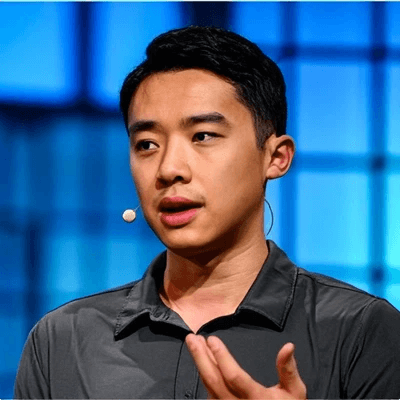
Romain Torres
Founder
,
Arcads AI
How This AI Startup Hit $7M ARR in Just 18 Months | Romain Torres, Arcads AI
Romain Torres, co-founder of Arcads AI, on hitting $7M ARR in 18 months by generating video ads with AI actors at scale.
Transcript
Manav: Today on the Pursuit of Knowledge Show, we have Romain joining us all the way from France. He's the founder of Arcads AI, a platform that makes talking-head videos for advertisements and other content using AI. So Romain, what was the inception of the idea for Arcads, and what can Arcads do today?
Romain: I come from a background of building mobile apps, and when you have a mobile app, there are really two important things you have to nail: making a good product, and marketing it. We were spending a ton of time and money working with UGC creators — creators with a small audience on TikTok or similar platforms who you pay for the content itself, not for their audience. At some point we realized AI was going to disrupt this, and it was going to be a massive market, because every single consumer product out there would eventually use AI to create UGC. So we decided to sell the mobile app we had at the time — it was a wellness app — and focus 100% on this new idea: how do we help consumer companies create winning ads using AI?
Manav: Before we talk about AI, can you explain what user-generated content is, for people not familiar with the term UGC?
Romain: Sure. When you have a consumer product, you're always trying to introduce it in a positive way, often with an advertising budget behind it. A very effective way to do that is UGC: you find someone who's good at acting, good at talking to camera, good at making engaging content, and who talks about your product positively — then you use that as an ad. A UGC creator is typically someone with a fairly small audience on short-form platforms like Instagram Reels, YouTube Shorts, or TikTok — not necessarily big enough to make a living off their own audience, but skilled at creating good content. That's what you use when you have a consumer product.
Manav: I've used UGC creators a lot in my own businesses — there was a platform called Billo, I don't know if you know it. The workflow was: you ship the product, whatever it is — jewelry, clothing — to the creator, send them a script, they take their time filming, send you the video, you give feedback, they revise it, you approve it, and then you finally have your ad, which you post or run. That was an incredibly long, annoying workflow, especially when you're a new business trying to get to revenue as fast as possible. Before that, people had in-house teams shooting content, and then platforms like Billo came along — but they were expensive too, $100, $150, $200 per video. So I'm guessing that's exactly why AI is set to disrupt this — the whole workflow collapses, and you can validate product demand and test ads really fast. What does the workflow look like with Arcads right now? How fast can you actually make an ad?
Romain: Minutes, basically. You type a script, we have a library of over a thousand AI actors, you browse and find the right one, click generate, and you get an engaging video in about two minutes. That's why it's so powerful — like you said, you go from multiple weeks and hundreds of dollars to two minutes and a couple of dollars.
Manav: What do you say to people worried about the uncanny valley, or bad lip-sync, people who say AI ads won't convert or won't be valuable?
Romain: That's a great question. When we started Arcads, almost two years ago now, in January 2024, that was probably the biggest question we had. Even back then AI was already pretty good at generating content, but that was the core hypothesis we had to validate as a business. We actually wanted to validate three things: first, would people pay for access to AI-made UGC and at least give it a try? Second, once they tried it, would they actually be comfortable putting it into their ad account and exposing their brand to AI-generated content? And third, once it's live and running, does it actually perform and drive results?
We were incredibly lucky — with our very first client, after two or three iterations, the ads we produced using AI became one of their top-performing ads. Normally in advertising you run maybe 10 to 50 ads a week, and roughly 10% become what's called "winning ads" — the ones that end up taking most of the budget because they deliver strong ROI. It's rare for a brand-new ad to become a winning ad right out of the gate, but that actually happened for our second-ever produced ad. At that point we knew: people are willing to buy this, because working with UGC creators is genuinely painful, and it can also drive real results. From there it just became a question of how fast we could scale.
Manav: It's shocking how much has changed in the last two years — Google released Veo 3, ElevenLabs released their V3 model, and it's insane. Even I'm thinking, should I still be making content myself? I know people with AI avatars now, perfect voice cloning through ElevenLabs, the best stock footage, and AI is finally getting hands right, getting text right. It's genuinely getting really good. How much better do you think this gets, or do we hit a ceiling somewhere?
Romain: That's a really interesting question. To your point about whether you should still be making content — I think two or three years from now, essentially every piece of advertising or entertainment content will be AI-generated. There's really no doubt about that. But for educational content, where you actually want to learn something, I think that's where most human-made content will continue to live. When you consume content purely for entertainment, you don't really care who's entertaining you — you just want to be entertained. For advertising, sometimes you want a brand associated with a specific personality, but even then, does anyone really believe a given celebrity drinks Nespresso every single day? Probably not. So even for advertising, I think most of what we consume will end up AI-generated.
For educational content, though, you want to trust the person teaching you, and trust that they actually have that specific knowledge. If I'm learning how to build a bigger business, I don't want to learn from a 17-year-old who's never built anything but is good at making content — I want to learn from someone like Jeff Bezos or Elon Musk, someone who's actually done it. So in that case, I'll probably keep consuming human content. I don't think the real question is whether AI will be good enough for all content to be AI-generated — it's really about which types of content end up AI-generated versus human-generated.
Manav: You might be onto something — Meta just put out a press release saying that by 2026, essentially all ads will be AI-generated. That sent shockwaves through the industry — people are saying ad agencies are going to die, there won't be work for actors, it's going to cause real unemployment.
Romain: No doubt, for sure — I mean, every business I talk to is getting leaner and leaner right now.
Manav: I want to talk about your growth. As a founder, you've put up incredible numbers — how much have you grown in the last two years? It's quite impressive.
Romain: We went from zero to almost $6 million ARR in about 18 months.
Manav: That's insane. It almost feels like you predicted this — like you already knew. What was one thing that hit exactly right, and what's your growth marketing strategy? I see you're active on Twitter — what drives the continuous growth?
Romain: First, what you described earlier is really the mission of any business — take something that's painful, costly, and slow, and make it easier and faster. The real "aha" moment for me was pitching this idea early on to potential clients. In the beginning we were using existing AI tools to produce ads for mobile app studios, e-commerce companies, and agencies, pitching them: "we'll produce your ads using AI." I vividly remember sending an email to one prospect — the email was just a link to a Google Drive with an AI-generated ad, and the message was something like, "Hey, I made this ad, it took me two minutes, here's the result, I think it looks good, what do you think?" And I remember thinking, wow, this is obviously going to be huge — who wouldn't want this, given how long it actually takes to produce real UGC content with real people? That was the first real "aha" moment for me.
Beyond that, it's the fundamentals of entrepreneurship — make something people actually want, something that solves a real problem. I know that sounds boring, but I think it's genuinely the main reason we grew so fast. The timing was right — if someone tried to launch the same idea today, it's probably too late, because people have already adopted our tool. And having the right acquisition channels mattered too. We had competitors launch around the same time, and a lot of them just never got traction — you can have the right idea and still end up with no users, or much slower traction.
For us, I started posting content on Twitter and LinkedIn, because we already had experience building and scaling a consumer product — we'd grown an app to multiple million in annual recurring revenue and sold it.
Manav: What was that app, if you don't mind sharing?
Romain: It was an intermittent fasting app — we were helping people in the US lose weight through intermittent fasting, and it grew almost entirely, like 99%, through paid marketing. We learned the hard way how to actually convert people into app users through paid marketing, and I learned a lot during those years that I could talk about on Twitter and LinkedIn. That became a good way to build an audience and then point people toward Arcads as a better way to produce ads. So I started publishing content on how to grow a consumer product using AI, and that became our initial source of traction.
On top of that, the product itself was inherently viral. I remember one Sunday, I woke up to hundreds of new customers per hour — we had a Slack channel that pinged every time someone made a payment, and it was completely flooded that day. It turned out one of our users had shared a video she'd made on Twitter — she didn't even have a huge audience, maybe 500 followers — but the video went completely viral, a bunch of Twitter influencers started reposting it, and it became this whole phenomenon. People genuinely didn't believe it was AI-generated. That was the second big push. Beyond that, we obviously worked hard across a large number of acquisition channels you need to optimize as a SaaS business.
Manav: Who's your ideal customer profile? I'm guessing a lot of young founders use your tool, but you're probably targeting more mainstream companies too.
Romain: The ICP is companies that understand you need to produce a lot of ads to succeed. Interestingly, the very biggest companies actually don't A/B test that many ads. There's a tool called the Facebook Ads Library where you can look at every ad from any page, and if you check out huge brands — Coca-Cola, Unilever, giant corporations with massive marketing budgets — you'll notice they don't run thousands of iterations, even though you might expect that, since performance marketing usually comes from testing a lot of variations. These big corporates take a different approach: they do brand marketing, not performance marketing, because they have to protect the brand. If you're Coca-Cola, you can't afford a bad ad going out — so you need tight control over every campaign's output, which means very few iterations.
Our real ICP is a company that tests a lot of different ads on a substantial budget — sometimes close to what those giant companies spend — but takes a genuine performance-marketing approach, testing a ton of different creatives. Think performance marketing agencies, big lead-gen companies, mobile app studios, e-commerce companies with real budgets — companies like TrueSlate, or gaming companies like King, the makers of Candy Crush, who test thousands of ad variations. That's the real recipe.
Manav: I'd guess those big brands don't test hundreds of ads partly because the cost of creating each one is so high for them — a Pepsi campaign might cost millions, so they simply can't afford to test a thousand variations.
Before we move to other AI ideas — two quick questions. What's the business model at Arcads, and are you public about which models you use under the hood?
Romain: We have internal models for most of it, though in some cases we use existing models — like you mentioned, ElevenLabs has an incredible voice model, and we don't want to compete with them on voice, so we just use their model there. But for most of the workflow, we use our own internal models.
Manav: And the pricing, the business model?
Romain: It's subscription-based. Anyone can go to Arcads.ai and start making ads with a paid subscription — it's credit-based, so the larger your volume, the lower your price per generation. The standard price is €10 per generation, which is around $10 or $11.
Manav: Entrepreneurship really is about making something faster, cheaper, and better — you've basically slashed the price by a factor of ten or fifteen compared to a traditional UGC video costing $100 or $150.
Romain: Exactly — and as long the ads convert, that's what matters. Right now there's also this effect where there still aren't that many AI ads on Instagram, so AI-made ads tend to stand out more.
Manav: Right, and I feel like that's part of why they can perform so well right now — they're just unique compared to everything else in the feed.
Romain: A hundred percent, they're unique right now. We're seeing more and more of them, though, and in two or three years it won't be a differentiator anymore, because everyone will be using AI for essentially every ad. I'm pretty sure adoption is going to move even faster than most people anticipate.
Manav: What's the next big thing you're working on at Arcads — what are you innovating on or thinking about?
Romain: LLMs are getting much better, and we can assume they'll keep improving every single month. When you make an ad, there are several things you need to nail: a good script, a person who looks the way you want in the ad, a voice that sounds right, and a good final edit. So far we've really focused on the quality of the actor and the voice, working with ElevenLabs — their newest voice model just keeps getting better automatically, and the faces keep improving too. We're working hard to stay the best solution on the market for the most engaging AI actors, which I think we are right now, without question.
But the next steps are: how do we use LLMs to help you come up with the ad concept itself faster, so you don't even have to think about what your next ad should be? How do we use the data from your own ad account, or from your competitors, to generate scripts likely to perform well? And as a user, how do we make it easy for you to just select and manage the AI output instead of having to come up with the entire creative concept yourself?
And once the video's generated — the talking-head portion — how do we make it easy to connect your existing assets, like screen recordings of your website or app, or product images, so you can produce the entire finished ad without needing an editor working in Adobe Premiere or whatever editing software?
Manav: That's incredible — you're basically making it so easy that people don't even need to write the script themselves, you're predicting it in advance. That's another level, you're thinking really far ahead.
Why is it that so many of these cool AI avatar companies are coming out of France? Is there a particular engineering demographic, some specific reason?
Romain: We have a lot of strong engineers, and a lot of talent in the consumer space too. I don't know if you're familiar with a company called Voodoo — they're one of the fastest, most innovative consumer companies in the world, and they recently acquired BeReal, one of the fastest-growing social networks ever. So there's this combination in France of strong consumer intuition and strong engineering talent.
Manav: Even the Yuka app — I don't know if you know it — that came out of France too. I've noticed a lot of popular food-related apps coming out of France for some reason. What part of France are you based in?
Romain: Yeah, it's quite interesting. I'm actually from the south of France. I'm planning to move to San Francisco in the coming months, because things are moving so fast that, even though France is a great place with excellent engineers and talent, I think the true leaders of the world — the OpenAIs of the world — are based in San Francisco. If you want to keep innovating at the fastest possible pace and build the best company in the world, which is what I think we can do, you need to be there.
Manav: I think you're right — I used to live in San Francisco, now I'm in LA, but San Francisco is insane. The talent density of founders there is incredible — there's always someone you're competing against, and it keeps you on your toes.
For people listening who think, "Romain, this is amazing, you grew Arcads, now I want to start a company in AI" — what other areas, not necessarily consumer, would you explore if you had free time?
Romain: I see a lot of companies following a similar trajectory to Arcads in the AI SEO space — people call it different things, but the idea is that SEO is shifting from Google toward LLMs — ChatGPT, Perplexity, and so on — and people are going to use these models to search for things. There's basically a blue ocean right now for software that helps businesses maximize their chances of ranking well in an LLM's responses. I've talked to a lot of companies in this space, and it reminds me a lot of our own early days — we're still early too, honestly — but they're probably eight to twelve months behind us in terms of growth and revenue, and I'd bet they'll be where we are now within a couple of months.
Manav: Just some context for the audience — what Romain's describing is GEO, generative engine optimization, helping brands rank inside ChatGPT and similar tools, since ChatGPT is genuinely eating into Google's search traffic and people are discovering products there now. I'm actually interviewing a company called PromptWatch soon, they're working on exactly this problem — there are quite a few companies tackling it. The thing I'm not sure about is how they actually track results, since OpenAI doesn't publicly expose search volume the way Google does with Trends.
Romain: Right — actually I've talked to a few of them. One told me they'd spoken with Sam Altman directly, and he told them OpenAI isn't planning to release an API that exposes search volume for specific keywords. So that's not happening anytime soon. Right now, the way these companies work around it is by making API calls to the OpenAI API, searching for keywords, and checking results across different IP addresses or VPNs to approximate visibility. I'm not totally sure how sustainable that approach is long-term, but it's a genuinely interesting space where a lot of innovation is going to happen.
Manav: What was the second idea you mentioned?
Romain: The second one is more of a general area than a specific idea — you've probably noticed more and more people using AI note-takers now. I use one for every single customer call I do. When you're growing fast, you end up doing a huge number of these calls, and the natural next step is a follow-up — say we had a call, I pitched you our product, and two days later I'd want to say, "hey, did you try the new feature we just shipped?" But when you're growing quickly, it's really hard to keep up with that manually, across every single call. That's basically what a CRM is for — I'd normally have a task reminding me to follow up with Manav about a specific feature.
I think this can genuinely be done with AI — taking information from one call and automatically sequencing intelligent follow-ups to previous conversations. I don't have a fully fleshed-out product idea for exactly what this looks like, and if someone's already building it, I'd love to hear from them — but using the content of your calls to automatically resurface and follow up on past conversations is something I find really exciting.
Manav: I think that's the natural next step. I've tested all the note-takers, and they do a pretty poor job on the follow-up side. It's the same story as AI agents in general — agents take it one step further, they actually do the work instead of just handing you the research. Have you tried a tool called Manus?
Romain: I did, back when it was going viral, but I haven't kept up with recent updates. Did they release something new recently?
Manav: It came out of China — it's an AI agent tool that takes things a step further, kind of like ChatGPT on steroids. It can actually go into a browser and complete tasks — book a ticket for you, that kind of thing, it takes action rather than just responding. There's also a tool that came out yesterday called Runner H — I'll put a demo on screen for people watching. You can connect it to your Gmail, and it'll draft a response to every unread email automatically — you just review each one and correct or send it. Really cool.
Romain: Yeah, that's something I'm excited about too. I've tried a bunch of these — Serif, another one called Fyxer AI. My issue with a lot of them is I really dislike the Gmail interface itself — I'm a big fan of Superhuman, the email client that's just faster and more organized. What I'm really excited about is either Superhuman integrating these capabilities directly, or a new company building something as fast as Superhuman but with AI-drafted emails and follow-ups baked in. Follow-ups specifically are the thing I'm most excited about, because I think there's a huge amount of money left on the table there — so many conversations that didn't close right away, where there's a real opportunity to close now because something new has happened, but you don't remember the original conversation because nobody updated the CRM properly. I think that's a massive opportunity — same underlying idea as Arcads, honestly: take something people already do, filling out a CRM, doing manual follow-ups, and make it faster and easier, and that turns into a business worth billions.
Manav: It's a little sad, honestly, but I recently moved my virtual assistant in the Philippines from full-time to part-time — I basically mapped out every task she was doing and automated it with make.com and Gumloop. It's wild — a human genuinely cannot compete with Gumloop on that kind of repetitive workflow. It's not physically possible.
Romain: Yeah, I'm also a huge fan of Gumloop. I think that's the second big opportunity with AI — you can build a business that gets adopted much faster, because you can build products that weren't possible before, solving problems in genuinely new ways, while also keeping your team very small by automating a lot of tasks. There's actually a good business idea in there for someone less technical — using Gumloop and selling automation services to businesses. It's kind of a "boring" idea, and plenty of people are probably already doing it, but I think there's still a ton of value there. If you're not a developer and don't have a specific technical skill, you can go on YouTube, learn Gumloop, start calling businesses, offer to automate parts of their operations, and I think you'd do great.
Manav: Do you have any predictions — did you see the news about Sam Altman partnering with Jony Ive on some new hardware product? We don't know the form factor yet, but it's supposedly meant to eventually replace something like the iPhone. Any guesses — sunglasses, glasses, a pendant, a band, what do you think it'll be?
Romain: On that specific one, I think it's going to be a genuinely competitive market, because it's actually pretty easy to build a version of this product — you just connect to OpenAI's API, and it's essentially a wrapper, but in physical form. I'd bet a ton of dropshippers end up putting something like a Raspberry Pi into a bracelet and selling it on TikTok, making real money before the space gets too crowded. I'm honestly not sure there's going to be one huge winner in the "tech" sense for this category — I think the winners will actually be dropshippers and people who are really good at paid marketing, because once a product is easy to copy and there's a lot of competition, your real differentiation becomes how well you market it.
Manav: Personally, I don't love talking to ChatGPT's voice mode — it responds too slowly for me. Instead, my workflow is a tool called Whisper Flow — you press one button on your Mac, it transcribes whatever you're saying, and it comes back in text, so I can read the response fast. That saves a lot more time for me than talking out loud and waiting on a slow voice response.
Romain: Do you use it to type things, like sending messages?
Manav: Yeah, I basically never type anymore — I press F9 on my Mac and it transcribes perfectly. Unlike the standard Mac voice memo transcription, which gets things wrong constantly, Whisper Flow nails it pretty much every time. I never type manually anymore, and it saves me a ton of time every day.
Romain: I'll give it a try.
Manav: How can people use Arcads.ai, and anything else you want people to take away from this conversation?
Romain: Arcads.ai is self-serve sign-up. Whoever's watching or listening, if you're an entrepreneur — learn how to distribute product, because with AI it's only going to get easier and easier to create the product itself. The real way to build a meaningful business going forward is to differentiate on communication and marketing — use AI to move faster on marketing than your competitors. If you genuinely master the skill of marketing a product, you're going to be unstoppable in the age of AI.
Manav: Amazing. So people can go to Arcads.ai to use the tool — how can people find you? Are you on LinkedIn?
Romain: LinkedIn and X/Twitter, under Romain Torres.
Manav: Thank you for coming on the show, Romain. We learned a lot today about how Arcads AI is disrupting the ad space — you've really optimized the workflow for people like myself who need UGC content but find it expensive and slow, especially when you're still validating whether a product will even be around in a year. This is a great product, solving a real problem, at a great price — that's exactly why it's taken off. Really happy to have had you on, and we should do a follow-up episode in a year or two to see where things stand.
Romain: All right.
Chapters
00:00 - Trailer
01:53 - What is UGC Creator
04:00 - What’s the workflow with our cats right now? How fast can you make an ad?"
04:28 - Skepticism about AI ads—uncanny valley, bad lip sync?
06:35 - Is AI content hitting its peak—or just getting started?
09:54 - How much have you grown in the last two years?
10:10 - What was like one of your growth marketing, strategy?
15:00 - What's your ideal customer profile—young founders or bigger companies?
18:54 - AI ads working now because they’re still rare and stand out?
19:35 - What’s the next big thing you’re building or innovating on?
21:57 - Why are avatar startups booming in France?
23:49 - What ideas would you explore if you had more free time?
32:36 - What do you think about Sam Altman and Jony Ive’s rumored iPhone replacement?