Consumer

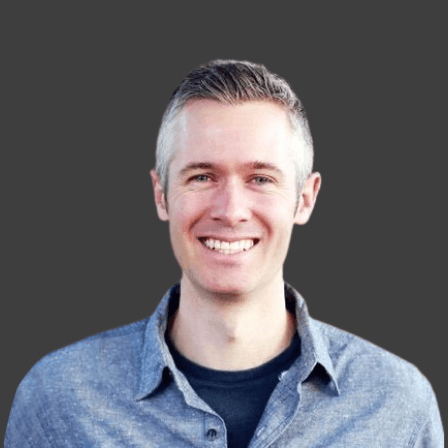
Shelby Clark
Founder
,
Turo
How He Built a $1B Brand by Letting People Rent Their Cars | Shelby Clark, Founder, Turo
Shelby Clark, founder of Turo, on building the world's first peer-to-peer car sharing marketplace into a billion dollar brand.
Transcript
Manav: This is Shelby Clark, a visionary entrepreneur who founded Turo, the world's first peer-to-peer car sharing marketplace, transforming a simple idea into a billion-dollar company. Shelby revolutionized how we think about car ownership and sharing in the modern world. Today on the pod, we have Shelby Clark, founder of Turo, a peer-to-peer car sharing platform. I'm really excited to have Shelby on the show — I'm actually a customer of Turo, and I recently rented a huge SUV through it. Today, Shelby is also a partner at Lionheart Ventures, where they invest in AI and mental health. Before we talk about what you're investing in, I want to start from the beginning with Turo.
Shelby: Sure, let's go. Thanks a lot for having me, nice to chat today.
Manav: So I was reading about Turo, and one thing most people don't know is that Turo used to be called RelayRides. Can you talk about the original story of how Turo started, and how you scaled it?
Shelby: Sure. It's always hard to figure out how far back to go, but I had a really inspiring experience early in my career with a nonprofit startup called Kiva.org. Kiva was a peer-to-peer microfinance lending platform — this was around 2006. Muhammad Yunus had won the Nobel Peace Prize in 2005 for his work in microfinance, and Kiva was the first time you had a peer-to-peer platform where the average person could loan $25 to someone who needed access to finance in, say, Bangladesh or Kenya. The company took off — I was the sixth employee — and it was exciting to be part of. We had a bunch of people locked in a room who knew nothing about microfinance, and we built one of the most influential organizations in the world, one that's since impacted millions of lives. I remember thinking, "Wow, this entrepreneurship thing is pretty cool." I was inspired, ready to start a company — except I didn't have any ideas, time, money, or partners. So I decided business school might be useful, and I enrolled at Harvard Business School in the fall of 2008, with a strong focus on starting a company.
Since Kiva was a peer-to-peer marketplace, I was really focused on peer-to-peer ideas — new ways of connecting people online. And there was very much a lightbulb moment. It was my first year of business school, and I was using Zipcar. Are you familiar with it?
Manav: No, but it was a car rental sharing platform, right?
Shelby: Yeah, a car sharing platform. Instead of a traditional car rental, where the cars sit in one big lot at the airport, Zipcar had cars scattered around town — you could pick one up nearby. It was an alternative to car ownership.
Manav: So it wasn't peer-to-peer — they owned their own fleet?
Shelby: Right, a big company — they eventually IPO'd, worth a billion dollars at one point. I was using Zipcar while living in Boston for grad school, and I loved being able to access mobility whenever I needed it — a convertible in the summer for the beach, an SUV in the winter when it was snowing, a Prius for groceries. I loved the idea, but in practice it was frustrating — I never planned far enough in advance, and the closest car to me was always booked.
One day in November of 2008, I reserved the closest available car, and it was two and a half miles away. It was snowing in Boston. So I hop on my bike and trudge through the snow to get to this car, and the whole way there I'm passing cars covered in snow that clearly hadn't been driven in weeks. And I had this moment: why do I have to trudge so far to get to a car, when there are unused cars all around me? I went back to my Kiva roots and thought about the power of a peer-to-peer marketplace. To satisfy our mobility needs, we don't need more cars on the road — we need to better utilize the cars we already have.
It was like Kiva, or eBay, meets Zipcar — and it was instantly, obviously clear to me. So, like any good entrepreneur, I went home and started looking up domain names, doing research to see if anyone else was already doing this. As far as I could tell, nobody was. The best domain I found that day was "Communal Wheels" — actually, before RelayRides, Communal Wheels was the name for a while. "Your Car Is My Car" was another one I reserved that day. Anyway, it turned out nobody was doing it, and the reason was insurance. I thought, I think we can solve this problem — I think this is a real need.
From day one, I was very clear on the idea and the vision. There were twists and turns, but it took about a year and a half to get the company off the ground, and we launched as the world's first peer-to-peer car marketplace. Now we're the largest — this year we'll do over a billion dollars in revenue, the company is profitable and growing, and the majority of that revenue actually goes into people's pockets. It's had a great impact. Lots of twists and turns, but a great experience overall.
Manav: I can imagine you had a lot of pushback — the same way taxis fought Uber. The existing car rental companies, Enterprise, Hertz — did they try to sabotage or undermine your operation somehow?
Shelby: We had some pushback, but rental car companies aren't nearly as powerful as, say, taxi unions, or the pushback Airbnb got from affordable-housing advocates. We got pretty involved in legislation — there are now laws all over the country, some for us, some against us. In some cases, people loved the idea — early on, states were actively trying to create legislation to encourage it. They saw it as a way for people to make money, and car sharing has been shown to reduce driving congestion. It sounds counterintuitive, but if you have access to mobility without owning a car — through Turo, bike share, Uber, a whole mobility portfolio — you're less likely to own a car, and if you don't own a car, you actually drive a lot less. Less congestion on the road. A lot of cities loved that — the money stays in the community, it's more scalable than Zipcar. So early on, we had a number of laws passed in our favor. It got a bit more contentious around airports, but for the most part we didn't see a ton of really strong pushback.
Actually, I'd say our biggest competitor was car ownership itself. And interestingly, the big automotive brands really engaged with us. There's this concept of the innovator's dilemma — a young disruptor comes in, and in many industries the incumbents try to stop it outright. Like the record labels — instead of figuring out digital music, they just sued Napster and similar companies out of existence, and missed the boat entirely. Same with Kodak and digital photos. Incumbents generally have a hard time dealing with innovation.
What we saw with car manufacturers was different — they actually wanted to understand what was going on and participate in their own disruption. We did a major deal with General Motors, took investment from several major automotive brands, had lots of conversations around partnerships, and BMW even launched its own peer-to-peer car sharing marketplace. It felt like a big industry trying to understand: hey, things are changing, these guys are onto something, what can we learn from this?
Manav: If you use Turo today, it's a very close to perfect product — the customer service is amazing, insurance works smoothly inside the app, and owners even have remote unlock so they don't have to show up in person. In the early days, what was the hardest thing? How did you figure out the insurance side, or was there a moment that felt like an impossible hill to climb?
Shelby: Insurance was a really big challenge — the first major hurdle for us. I actually had a co-founder who was an insurance expert; she said, "Okay, I can figure this out," given her background. And after about six months, she quit and told me, "You're never going to figure the insurance out, I'm out." I remember thinking, can I even say that on a podcast? But I was just like, this is going to work, I know it's going to work.
So what I did was find the small local nonprofit car sharing services — there were little nonprofits that had realized car sharing could have a good impact in their communities. There was one guy who'd underwritten the insurance for about ten of these little services. Eventually somebody introduced me to him, I told him what we were doing, and he said, "This is brilliant." I got him to invest in the company and become our insurance broker. At that point our interests were aligned, and he was willing to move mountains for us — but it still took a long time. He told me, "Shelby, I'll have this policy in two weeks, start getting your team ready." So I mobilized the team, got the marketing ready, everything. Two weeks passed. Then it was two months. Then four months. It ended up taking eight months from the time he told us it'd be two weeks. In the meantime, a lot of my team left — they lost faith. It was a genuinely brutal stretch.
I remember, entrepreneurship is a rollercoaster — people tell you about it, but living it is harder than you'd think. The highs are higher, the lows are lower, and you swing between them faster than you'd expect. I was in my second year of business school, and I got an email from one of my investors — an older gentleman, maybe in his eighties, who couldn't quite distinguish between the subject line and the body of an email, so he put the entire message in the subject line: something like, "Shelby, you must shut down RelayRides immediately due to your inability to keep your team together and launch the product." My main investor was asking for his money back and telling me I was failing. At that exact same moment, the next email in my inbox was from The Economist, asking to feature us in an upcoming story. And at that same moment, I was sitting in the final round of a business plan competition, and we'd just been announced as one of the three finalists. In the span of ten minutes, I went from the floor to the ceiling and back to the floor. So yeah, the early stages — especially getting the insurance right, and keeping a team motivated through those swings — were challenging, to say the least.
Manav: Jeff Bezos always says most people overestimate the risk and underestimate the opportunity. You built a marketplace business, and marketplace businesses usually take a decade or two to mature. In the early days, how did you think about supply and demand — you always need both sides — how did you get people to enroll?
Shelby: In the earliest days, we took a really hyper-local approach — generating supply and demand at the neighborhood level. We launched in Boston while I was in business school, then moved to San Francisco after raising our Series A. We grew very slowly in these small markets, trying to be surgical about it.
Then we hired a new CEO, Andre Haddad, who's still the CEO today, thirteen or fourteen years later. His background was at eBay, so he was an expert at building marketplaces and really understood the nuances. What he understood is: you build the infrastructure, you make the transaction safe and convenient, and then you get out of the way. Up to that point, we were doing everything ourselves — customer service, installing devices in every car — creating a lot of friction by inserting ourselves into the middle of every transaction, which I'd thought was critical for matching supply and demand well. Andre knew the market would do it better if we just provided the infrastructure.
Andre decided we should launch nationwide, and I freaked out — we were still in two markets, growing slowly, trying to get those to thrive. But his intuition was right. We launched nationwide, and honestly the first year was painful — we hadn't reached a balance of supply and demand, growth was slow, and it got genuinely difficult. We went out to raise our Series B and failed — we weren't showing enough traction. Our investors ended up doing an internal round, and we had to do a round of layoffs. Really challenging.
Fortunately, in year two, enough organic inventory had built up — you'd get supply in an area, then demand would form around it, and that pattern kept repeating city by city until we had a pretty solid national supply base. People talk about the chicken-and-egg problem in marketplaces — for us, the answer was clearly the chicken: supply comes first. You absolutely need high-quality supply on the marketplace before demand follows, and it took time to learn that.
Interestingly, we had one big competitor at the time, called Getaround. We did this big nationwide launch, and it took a while to build momentum. Getaround stuck with a city-by-city model. In the end, we ended up about ten times larger than Getaround — they tried a stock IPO and it failed, and they went out of business. So we got to see, almost side by side, market-by-market growth versus a broader national approach. I think being first to market, and being able to create supply and demand at scale, even though it was hard, is what let us solidify ourselves as the market leader.
Manav: To give you credit — the app interface just wasn't there yet in 2006, 2008, the way we'd expect today. You were, in a way, ahead of your time. How did the app and interface evolve over the roughly twenty years this company's been around?
Shelby: Interesting question. We had an app pretty quickly — we launched the company around 2010, and I want to say we had an app within a year. If anything, we actually took a step back at one point. We'd launched with a high-tech, high-touch model — devices installed in every car — and then stepped back from that, because it was too much friction, and scaling a hardware install into every vehicle was really hard.
Another thing we did early on was partner with General Motors. GM had an in-vehicle platform called OnStar that they wanted to open up, and we were the first example of that. Through the RelayRides app, you could unlock your GM vehicle directly through OnStar without installing any hardware. We thought it would be a dream integration, and from a technology standpoint it worked really well — instantly we were tied into millions of cars around the country. Unfortunately, the partnership itself didn't do very well — there was a mismatch between GM's older, more suburban audience and the early-adopter, urban audience we were targeting. It just wasn't a great fit for us.
But that wasn't really where our technology story was won or lost. Our app and interface have certainly gotten better over the years, and we've gotten smarter about how we run the business, but I don't think technology improvements were the real unlock. It was mostly long, consistent growth — we've just been at this a really long time. We weren't an overnight success, not 100x growth in two years — more like 3x growth over fifteen years, and suddenly you've got a billion-dollar company.
Manav: In a way you started a category, not just a company. If you search Turo on YouTube, there's a whole subculture — channels dedicated entirely to Turo, teaching people how to start a Turo business. My roommate had three "slingshots" she was renting out on Turo.
Shelby: That's one of the coolest things about it — it's transcended being just a company. One of my favorite parts is that we inspired entrepreneurship and made it possible for people to earn income on their own terms. Years ago, I remember getting picked up in New York by a guy who had five cars listed — he was a starving artist trying to make it, and instead of waiting tables in bars, he built a fleet of Turo cars. I loved that story — people using this to pursue their dreams and make money. That's continued today — there are people who make more than a million dollars a year on Turo, and I think that's amazing.
Manav: I want your take on robotaxis and Waymo, and this shift toward self-driving. What do you think?
Shelby: I think it's great. Vehicles are one of the biggest sources of emissions we have, and a person driving alone in their own vehicle is about the most wasteful way to get around. As people have more mobility options, they're less likely to drive their own vehicle — that's better for society, for the environment, for the pocketbook. As we get more mobility options, I think it's good for everybody. I'm not sure exactly how it impacts Turo and broader mobility long-term. There are times I'll still really want a car — if I'm going to the beach for the weekend, I like being able to drive, have my stuff in the car. I think it'd be unlikely for me to take a weekend getaway with five friends in a Waymo — maybe I'm wrong, ask me again in ten years.
I think it's exciting to see these changes, and there's more coming. eVTOLs — electric vertical takeoff and landing vehicles, kind of personal drone-planes — are on the horizon, and they actually work today. The reason we don't see more of them is mostly regulation; we haven't figured out the best way to regulate them yet, not because the technology doesn't exist. So the coming years are going to be quite a ride.
Manav: I want to talk about the transition after Turo. What did you end up doing, how did you become more of an investor, and what do you look for in people when you invest?
Shelby: Let's see — again, figuring out how far back to go. I'll be a bit vulnerable here, because I think it's important to understand the whole arc. Honestly, I was pushed out of the company at Turo, which was a really difficult experience. A lot of entrepreneurs become so identified with their company — it becomes your baby — that you ask, who am I without it? So I started another company, which felt like the logical next step. It was called Peers — a benefit for gig economy workers, people driving for Uber or hosting on Turo or Airbnb who don't have a traditional social safety net. There was actually a lot of political momentum around an idea called "portable benefits," which we were trying to pioneer. It didn't work, and the company failed.
I was really stuck. Do I start another company? At that point Turo was doing quite well — if I start something else, does it need to be more successful than Turo? What does that even mean — raise more money, have deeper impact, be worth more? When is it enough? On a bit of a whim, I found myself in a depression, honestly — I didn't know what to do next. So I went to Bali and did a yoga teacher training. I knew that when I moved my body, I got out of my head and felt better, and the training was a phenomenal experience — yoga, meditation, breathwork, mindfulness, Eastern philosophy. It turned the camera around on my life.
At the end of that training, I did my first psilocybin journey — magic mushrooms. I'd done mushrooms recreationally before, at music festivals, with friends, but never intentionally. I was able to watch a lot of the stories I'd built up around myself melt away, and to see my life from a different perspective — and it turned out that underneath it all was love, joy, connection, and that a lot of what I'd been judging myself on wasn't really that important. The last eight years have really been catching up with that realization.
I came back and realized there was an entire world of psychedelic therapy emerging, and I wanted to get involved and support it. I moved to Costa Rica to help open a psychedelic retreat center community — the first one was called Holos. As I did that work, I realized I really wanted to focus specifically on the LGBTQ community, which I'm a member of, so I opened another retreat center focused on that community. We called it Jungle Neighborhood, and we're actually just rebranding to Casa — CASA, Spanish for "home" — for the queer community. Kind of similar to the Turo story, actually — starting with RelayRides and rebranding to Turo, starting with Jungle Neighborhood and evolving into a simpler brand.
So now I live in Costa Rica, in one of our bamboo cabins, hosting different types of retreats and events for the LGBTQ community. Around the time I moved to Costa Rica, I decided I wanted to get more involved in investing, particularly in psychedelics and mental health. I met a partner, David Lenok, who'd founded a venture fund called Lionheart Ventures. I was already really active in mental health and psychedelics, so I joined him — that was a bit over four years ago. Since then I've invested in a number of companies across mental health, psychedelic therapies, neurotech and wearables, consumer AI for mental health — there's a lot of interesting stuff happening in a space where there's clearly a major mental health epidemic around the world.
Manav: I'm glad you went through that spiritual awakening — you look really healthy for it. A lot of people right now in America feel like they have no purpose — they're drowning in debt, not having kids, not getting married, and society feels difficult right now. There's also this movement of people leaving the US for Bali, Thailand, Costa Rica, wherever they can afford. I do see a lot of that transition happening. How do you spend your time today — daily practices, staying mindful, staying conscious of your surroundings?
Shelby: As much as possible, I try to get out of my head and into my body. I think that's where the human experience really lives — we get trapped in our heads: what am I supposed to do, who thinks what of me, what has society told me to do. The more we can tune that down and tune into the body's intuition, there's a lot of wisdom there, and a lot of joy too.
The path here wasn't clear or linear. Before the yoga teacher training, I spent a lot of time spinning my wheels on a five-year plan — trying to answer "what am I going to be in five years" with pure logic, a to-do list, pros and cons — and it just didn't work.
I sometimes joke that technology used to be built through what's called "waterfall" development — you'd plan the whole thing out, step one, step two, step three, in a linear sequence. In reality, as you built step one, you'd realize the plan needed to shift slightly, because you were getting smarter as you went. So most technology today is built through agile development instead — iteration, testing and learning, taking one step at a time, knowing your general direction but staying open to learning along the way. If you ask a good CTO when an app will be done, they won't give you a fixed date — they'll tell you what's in the next sprint, a one- or two-week chunk of work.
That's what the last couple of years have been like for me — taking it a step at a time, guided by what felt right in my body, by intuition, getting out of my head. I journal a lot — that's how I process information, how I figure out what's going on in the monkey mind. I try to meditate daily. Breathwork is a favorite practice of mine. I love dancing — ecstatic dance, sort of a daytime dance party, not trying to impress anyone, just moving the body. And being in nature — I moved out of the city, and I feel really inspired and refreshed by being in a healthy environment.
Manav: What are you observing in the psychedelic industry? I've personally used psilocybin mushrooms, and I've noticed they can break your frame when you're stuck in mental loops. I'm also seeing ketamine clinics popping up around LA, where I'm based, and mushrooms seem to be somewhat legal now, though I'm not totally clear on the law. What are you seeing, and what innovations are coming out of that space?
Shelby: A couple of things. There's a big societal shift happening where people are becoming more open to this. There was a big War on Drugs in the '80s that I don't think did anybody any favors, and there's a ton of science now showing that psychedelic medicines, or psychedelic-inspired medicines, can have huge impacts. We don't really have good treatments for mental health — SSRIs and antidepressants tend to just numb you rather than address underlying issues, whereas psychedelics can actually address the underlying patterns. They can break you out of the thought loops you mentioned and help you see things from a different perspective — and once you've seen that, you kind of can't unsee it. They can melt away the stories and expectations society layers onto us and help us see what our life looks like without them. They've also been shown to promote neurogenesis — the creation of new neural pathways — so your brain can literally rewire around a new perspective grounded in connection and safety.
On the science and policy side: there are FDA clinical trials happening with psychedelics across a number of medicines and indications. MDMA, for PTSD, was the furthest along — it made it all the way through clinical trials, but the FDA ultimately didn't approve it. There's a lot of conversation about why, but I don't think that's dead — I think there's a good chance they'll run another trial and it'll get approved eventually. It's just a very different regulatory approach for the FDA than what they're used to.
Psilocybin is close behind — because of the MDMA denial, it looks like a psilocybin variant will likely be the first psychedelic approved, for treating depression. And as you mentioned, there are ketamine clinics all around LA, and really the world, and a lot of evidence showing these can have long-lasting, profound improvements in mental health.
We're investing in that space, and we're also seeing psychedelics have impacts outside of mental health, in other parts of the body. One company we work with has created psychedelic-inspired molecules with a profound impact on inflammation. Similar to depression, we don't have great drugs that address the underlying causes of inflammation — corticosteroids, aspirin, Advil, they mostly manage symptoms. Some of these psychedelic molecules seem to have a resetting effect on parts of the immune system. Lots of interesting things happening.
Manav: I was shocked to find out that 40 million Americans take Adderall, and the Xanax numbers are even higher. My worry is over-engineering — like how the THC content in marijuana used to be much lower, and now regular marijuana can be 30 or 33% THC. I hope the psychedelic mushroom industry doesn't get over-engineered to the point where it becomes an extremely potent substance.
Shelby: It's a very different approach. There's movement toward decriminalizing psychedelics in certain states and cities, which I think is great, but at a high level there's a lot more activity going through the FDA, meaning you'll end up with drugs that are actually approved and regulated federally. That's very different from how cannabis was decriminalized state by state. It's a different approach, and it matters — psychedelics aren't for everybody, and they can be genuinely dangerous if you're not in a safe setting, or not ready for what might come up. It's important to have a trained guide if you're going to work with these medicines — I'm not recommending this for anyone specifically, and it's important to weigh both the benefits and the risks. Having things go through the FDA is important, because it means these will be administered by professionals in a safe setting. I think that's going to shape a very different rollout of these medicines in the US and around the world.
Manav: For everyone listening or watching — ideas feel abundant these days. Back before ChatGPT, you couldn't just ask an AI for pros and cons on the spot; now you can, so there's real idea abundance. With Turo, your problem selection was itself the key insight: a peer-to-peer marketplace for car sharing. How do you think about choosing which problem to work on, and committing a decade of your life to it?
Shelby: I think necessity is the mother of invention. I'd say start with a problem that's really dear to you, one that has deeply impacted your own life. Entrepreneurship is very hard — really understanding your "why" matters a lot. If you just scan a bunch of trends trying to identify the best startup idea in the abstract, I don't think that works very well — and when things get genuinely tough, it's hard to stay dedicated to something you don't have a real connection to.
But if you're solving a problem you personally have — with Turo, I had that problem, I wanted a better solution than what Zipcar was giving me. I cared a lot about it, I felt genuinely passionate about its possibility. So when things got tough — like that email from my investor — I thought, "screw it, we're going." Making sure you have that real connection, that you're starting from a problem that's near and dear to you, is always going to be a good source of that kind of motivation.
Manav: How can people get in touch with you — if they want your advice on their business, or if they're interested in coming to Costa Rica for a retreat?
Shelby: Sure. I do one-on-one coaching if anyone's curious — I love coaching early-stage entrepreneurs. You can find me on a platform called Intro — the app is called Intro.me — for one-on-one coaching. And if you want to come down to a retreat in Costa Rica, our focus is the LGBTQ community — Casa, QASA.house is our website.
Manav: For people who are curious, I'll drop links to both Casa and Intro in the show notes or the YouTube description. If you like what you've heard, go reach out to Shelby — he literally scaled Turo into a billion-dollar company. Before I let you go — do you know when the IPO is happening?
Shelby: Your guess is as good as mine.
Manav: All I'll say is I'm going to buy some shares, because I like investing in companies I actually use or am a customer of. That's all I've got — thank you for coming on.
Shelby: Well, thank you.
Chapters
00:00 - Guest Intro
00:51 - Early Inspiration
03:52 - Lightbulb Moment
05:36 - Launching Turo
06:27 - Pushback & Industry Response
10:22 - Biggest Early Challenge
14:16 - Cracking Supply & Demand
18:46 - Tech & Scaling
21:15 - Creating a Category
22:25 - Future of Mobility
24:52 - Life After Turo
26:28 - Spiritual & Personal Shift
28:58 - Investing in Mental Health
34:11 - Psychedelics & Society
40:35 - Advice for Entrepreneurs
42:15 - How to Connect