Tech

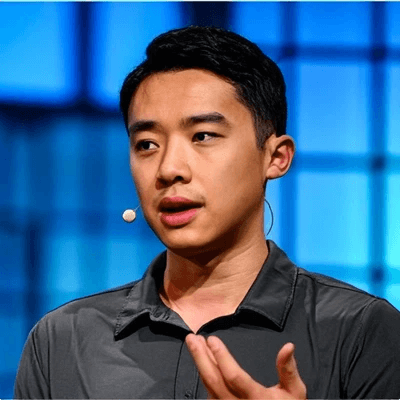
Peter Voss
CEO & Chief Scientist
,
Aigo.ai
How AI Could Solve Humanity’s Biggest Problems
Peter Voss, who coined the term AGI, on cognitive AI, robotics, and building Aigo.ai as a direct path to artificial general intelligence.
Transcript
Manav: Today we have a guest who literally coined the term AGI — artificial general intelligence. He's a mastermind who took a software company from his garage to a 400-employee company, taking it public in just seven years. He's a serial entrepreneur, engineer, and AI pioneer with a lifelong mission to bring human-level AI to the world. Currently, he's building a company with a direct path to AGI called Aigo.ai. Please join me in welcoming Peter Voss, CEO and Chief Scientist at Aigo.ai.
What does AGI even mean?
Peter: The term has really changed a lot since we coined it — three of us coined it back in 2002. Let me give you a bit of the history of why we coined it. When the term "AI" itself was coined, 69 years ago now, the original idea was to build thinking machines — machines that can think, learn, and reason the way humans do, that can learn a wide variety of things the way a smart human can. That was the original intent, and people at the time figured they could solve it in two or three years. Of course it turned out to be much, much harder — now almost 70 years later.
What happened is the field of AI really turned into the field of narrow AI, where you pick one particular problem that requires human-level intelligence, and figure out how to write a program to solve that specific problem. A perfect example is Deep Blue, IBM's chess-playing world champion program. In narrow AI, the actual intelligence is external — it's the intelligence of the programmer solving the problem, deciding which algorithms to write and how to optimize them to play chess. Then you want to do something else — container optimization, medical diagnosis — and again, it's the intelligence of the programmer or data scientist doing the real work. The field of AI really didn't live up to its original promise.
So in 2002, a few of us got together and said, we think the time is right to go back to the original dream of AI, to build actual thinking machines. We decided to write a book on the topic, but we wanted a different term, so we came up with "artificial general intelligence." The "G" actually corresponds to something in cognitive psychology — lowercase "g" refers to general intelligence, or IQ. So AGI means having a system that can, by itself, figure out how to play chess, or do container optimization, or medical research, or whatever it might be — a system with the general ability to learn many different things largely on its own. That was the original meaning of AGI.
In the last few years, with ChatGPT and the massive money flowing in, the term AGI has been picked back up, and it's turned into a bit of a mess, honestly — it's become a marketing term, a term used to raise funding. You get ridiculous statements like Sam Altman saying, "oh, we'll have AGI soon, but it won't be a big deal," which makes no sense — if you actually have AGI, it is a big deal. So there's real confusion about what AGI actually means. Genuine AGI requires a system that can adapt to changing circumstances — and that's exactly why large language models can't be the path to AGI, because they can't adapt.
Manav: So AGI means a machine can conduct independent thinking.
Peter: Yes — specifically, that it can learn new things and adapt to changing circumstances. It needs to be able to think on the fly. Like right now, in this conversation — I'm learning from you, you're learning from me, we're updating our models of the world and coming up with new ideas, learning incrementally as we go. AGI is also about solving genuinely difficult problems — being a cancer researcher, a master programmer, whatever it might be — but the system can teach itself. It's the autonomy, not needing a human constantly in the loop.
Manav: Aigo's approach is cognitive AI — how is cognitive AI different from large language models?
Peter: DARPA actually came out with a nice framework a few years ago describing three waves of AI. The first wave, people now call "good old-fashioned AI" — largely logic-based approaches. Deep Blue is a good example — lots of logical rules, maybe some statistics, but that's basically the first wave, which covered roughly the first sixty years of the field, the '70s, '80s, '90s. There were expert systems, sort of handcrafted decision trees, Deep Blue's chess program, container optimization — sporadic successes in narrow applications.
The second wave hit us like a tsunami about twelve or thirteen years ago, when people figured out how to use massive amounts of data and compute to actually do useful things. Big companies like Google had tons of data and compute, and the question became, how do we leverage that? That's the statistical, big-data approach — deep learning, in the early days, brought tremendous improvements in speech recognition, translation, image recognition, and opened the door to things like self-driving cars. That was a genuinely big advance. Over the last few years that's evolved into generative AI and ChatGPT, which took it to another level entirely by scaling even bigger systems, building this huge oracle with massive amounts of trained-in knowledge. So generative AI, ChatGPT, and even what's now called "agentic AI," are all still part of that second wave — all built on big data, and in the last few years, all built on transformer technology, which is really just a particular way of number-crunching data.
The third wave, according to DARPA, is adaptive AI that can learn by itself, without needing massive amounts of data — working more the way our actual brain works. It's worth considering just how different that is: our brain runs on about 20 watts of power, not 20 gigawatts. We don't need a nuclear power station to power a human brain, and a child can learn language from maybe a few million words, if that.
Manav: Some people argue even humans function like LLMs — we're always predicting the next word we're going to say.
Peter: But we have higher-level processes on top of that. We know when we don't know something, whereas an LLM doesn't know when it doesn't know something — it'll just make things up and sound very confident doing it.
Manav: Hallucinate.
Peter: Right, and very confidently tell you something that's complete garbage. There are a few technical differences we can go into, but really the biggest one is that cognitive AI is much more like the human brain — it can learn incrementally, in real time, with far less data.
Manav: And that's the third wave?
Peter: That's the third wave — cognitive AI, the approach we've been following since I coined the term. It just makes sense for a system to be able to learn as it goes along. Large language models are very powerful and useful for many things, but they can never be fully reliable, because they don't know what they don't know. The other problem is they can't adapt to changing circumstances.
I'll give you a clear example of just how severe that limitation is. We recently had a presidential election — the day before, we didn't know who was going to win, and once the results came out, suddenly a lot of things changed. Your model of the world needs to update. With large language models, you'd need to number-crunch for a couple of months to get a new model reflecting the new situation — and even then, it still wouldn't really be up to date, because the data cutoff is whenever training started. It's just not at all how humans work — as soon as we learn a major result, something changes in the world, we immediately start thinking through the implications and updating what we now expect to happen. Large language models simply cannot be updated in real time — it's not possible with that architecture.
I actually authored a paper where we reviewed more than 200 research papers looking at attempts to get large language models to learn incrementally — there wasn't a single one that could actually update the core model itself. That's why companies spend hundreds of millions of dollars — Elon Musk alone spent $5 billion just on the data center for Grok, and who knows how much more to actually train it, maybe half a billion to a billion — and then you use it for a few months and it becomes outdated, and you throw it away and start over. If they could genuinely update these models incrementally, they wouldn't be discarding and rebuilding from scratch every time. It's a very severe limitation, and the third wave, cognitive AI, makes much more sense — it's ultimately what's required to get to real AGI.
Manav: How would one even go about building that — is that a trade secret?
Peter: No, no — I've written about it, not in total technical detail, we're not open source, but I can describe the approach. We have a knowledge representation — a vector graph database we've developed ourselves, very high performance. Our graph database is literally a thousand times faster than any commercially available graph database. It's a knowledge representation specifically designed to be updated in real time, incrementally, which also means it isn't opaque, isn't a total black box — and it uses mechanisms actually similar to how our brain works, where you can hear one sentence, learn from it, and think through the implications right away.
A few technical details worth mentioning: having your knowledge representation be incrementally learnable matters, and it's also important for it to be what's called "neurosymbolic." The "neuro" part is essentially how large language models work — fuzzy pattern matching, where something seems similar to something else, and that's used to predict the next word. But you also need high-level logical thinking — what's called symbolic reasoning. In our approach, the data representation for both the neural and the symbolic side lives in one uniform database, so our system can switch between the two modes of thinking.
There's actually a nice parallel in cognitive psychology — you may have heard of System One and System Two thinking, Daniel Kahneman's "Thinking, Fast and Slow."
Manav: Exactly, yeah.
Peter: That's exactly it — System One is the automatic, fast responses, much more like what a large language model does. System Two is our metacognition, our logical thought, that supervises System One and can step in and say, "wait, I'm not sure here, I need to think more," and directs our thinking accordingly. Our cognitive architecture can operate in either mode — they're not two separate systems, it's more like a mode you're operating in.
Manav: I'm trying to imagine the world where this cognitive AI exists right now. ChatGPT is a chatbox people can easily wrap their heads around — you prompt a question, you get an answer. In a world with cognitive AI, is there an application you've envisioned that could be used by the masses?
Peter: Oh, absolutely. What we're focused on right now at the company is getting all the way to full AGI — adult-level general intelligence. Over the years, our company has alternated between developing the core technology and commercializing it, trying to make money and attract investment. We commercialized systems that weren't anywhere near AGI yet, but were already built on a cognitive architecture. Right now, though, we're 100% focused on taking the core technology all the way to human-level AGI, because the implications and benefits to humanity are just tremendous.
I can break the benefits into three buckets. The first: an AGI can be an incredibly powerful researcher in any field. Take cancer research, for example. Let me back up one step and sketch what a generic AGI would look like — think of a smart college graduate, general training, some statistics, some math, general knowledge, but small, smart, and highly motivated. That's your baseline AGI. But once you have that, it can teach itself, like a human but much faster, to become, say, a PhD-level cancer researcher — or a researcher in battery technology, nuclear power, pollution control, whatever the field. Now you have this AGI cancer researcher, and you can make a million copies of it — a million PhD-level cancer researchers chipping away at the problem from different angles, but also communicating with each other far more effectively than humans do, without egos getting in the way, able to instantly share whole chunks of acquired knowledge. Imagine how much faster progress would be on conquering diseases, solving technical problems in nanotechnology, energy, pollution, whatever it might be.
Manav: So that would be the biggest use case — curing cancer, figuring out nuclear energy.
Peter: Absolutely — just think of the benefits to problems humanity has been chipping away at for a very long time; progress there gets accelerated tremendously. That's the first bucket, and it's extremely exciting for how it improves the human condition.
The second area is more obvious: any deskbound, cognitive job can now be automated at a much lower cost than a human. That means a dramatic reduction in the cost of goods and services, because that same smart college-graduate-level system can teach itself to become an accountant, a programmer, a manager, whatever role, and automate it effectively.
The third bucket, which I'm actually the most excited about, is what I call the "personal personal assistant."
Manav: Why two "personals"?
Peter: Two different meanings of the word. The first is that you own it — it serves your agenda, not some mega-corporation's agenda. It's there for you, you control it. The second "personal" means it's hyper-personalized to you — it learns over time whatever you want to teach it about your history, your goals, your personality, your likes and dislikes, who your friends are, what you're trying to achieve, and so on. Imagine having this personal personal assistant with you all the time, almost like an exocortex, an extension of your own brain.
What excites me most is that it'll make us better people — it'll help us think things through, catch mistakes we might otherwise make, like getting into a bad business relationship or personal relationship, whatever it might be. We'll have this assistant to help us reason things through and give us advice, on top of doing the dirty work for us, like dealing with insurance companies and banks. That's AGI — immensely powerful, immensely beneficial to humanity. It's why I can't imagine wanting to work on anything else.
Manav: It's extremely exciting. It's also extremely scary, I have to say. I just can't imagine that we'll have enough new jobs created to fill the demand for 8 billion people. I think the next big question is: what will humans actually be doing?
Peter: Let me turn that around. People think of unemployment as scary, but flip it — if I asked most people, would you like to win the lottery?
Manav: Yes, of course.
Peter: Almost everyone would say yes — maybe a billionaire says "I don't care," but most people would love to win the lottery. Why? Because then they could do the work they actually want to do, or not work at all — travel, spend time with friends, family, kids, pursue education, do research, build something, whatever it might be. Total freedom. If the amount of wealth AGI creates lets people live that way without having to work, well — if you look at history, the work week has already shrunk tremendously. There's solid data on this: people on farms used to work 14-hour days just to make a living.
Manav: I feel like the whole concept of money is going to change — like how we went from a barter system to a financial system. I know people are experimenting with universal basic income, but I honestly don't know what the next phase looks like.
Peter: We'll have AGI to help figure that out too. There'll still be money, still be value, because there are only so many houses on top of Beverly Hills, only so many people who can attend a live performance of your favorite artist. There will always be scarcity, and people will exchange money or value for access to that scarcity. But people won't need to work nearly as many hours, if any, to afford a very good life, if that's how they choose to structure it. Different people will want different degrees of autonomy retained — some will say, "just help me manage my life, I'll watch TV," and that's fine too.
Manav: This connects to something the CEO of Nvidia, Jensen Huang, said recently — that humanoid robots are having their "ChatGPT moment" right now, where every household will eventually have a humanoid robot helping with mundane chores, and each robot could be powered by AGI.
Peter: Robotics will come after AGI. Right now robotics is the big hot thing raising a lot of money, but you're not going to put a robot in your house until it has human-level general intelligence, because it needs to learn on the fly — you got a new pet, a new child, visitors coming over, how you treat different kinds of visitors, something breaks in the house. You can't pre-program all of that. The system needs general intelligence, needs to know what it doesn't know. Robotics will work fine in a factory, or other very confined situations, but a personal robot in the home requires AGI first — and AGI will actually help make that happen.
Manav: A lot of these new models claim strong reasoning capabilities — how does that differ from true AGI-level reasoning?
Peter: First, that reasoning ability is actually very brittle — it only really works well within the specific things it's been trained on. Again, it doesn't know what it doesn't know, and some of the mistakes it makes are genuinely bad. There's also a lot of distortion in how large language models get evaluated — they've often been trained heavily on the benchmarks themselves, things like the bar exam, and the results look impressive, but there's a lot of contamination — you don't always know how much of the "answer" is just memorized from training data versus genuine reasoning. There are plenty of examples where they fall down dramatically. There was recently a paper showing that top large language models can't reliably learn how to multiply numbers — they just break down.
Manav: That's one thing I've noticed too — it's genuinely bad at math, and I always have to double-check, because it's wrong a surprising amount of the time.
Peter: Right, because they don't learn the way a child learns, or the way we learned mathematics. They learn through pattern recognition, based on frequency — how many times they've seen a particular pattern. They don't understand that multiplying two large numbers requires actually going through a procedure, the way we've learned to do in our heads. They don't even know they should reach for a calculator to solve the problem, even though they could. They simply don't have an understanding of what they know versus what they don't know, or when to use a particular tool. That's called metacognition — they genuinely don't have it. They don't have control over their own thought processes.
Manav: What do you make of DeepSeek's approach compared to OpenAI?
Peter: DeepSeek really isn't that different — they've been smart about combining different techniques and taking some clever shortcuts, but what they can ultimately achieve is no better than other large language models. They just require less compute power. They're not doing anything fundamentally different from other LLMs.
Manav: One of Aigo's applications has been building voice agents — is there a product people can use right now, or is everything still in beta?
Peter: We had a commercial venture where we took our core engine and built it out specifically for call center operations. Our best-known customers were 1-800-Flowers and the Harry & David group of companies — about 12 companies total. Last Valentine's Day, we replaced over 3,000 agents they'd normally have to hire for just that one week with our technology. It wasn't AGI, it was cognitive AI, but with a lot of human input — grammar rules and reasoning rules that were essentially handcrafted, programmed in — so it didn't have the flexibility to learn on its own. About seven months ago, we decided to put our commercial business entirely on hold to concentrate fully on building AGI. Why should we chase scaling to $10 million, even $100 million in commercial revenue, when AGI is a multi-trillion-dollar opportunity — which it literally is?
Manav: A lot of companies are chasing the low-hanging fruit.
Peter: Of course, and it makes sense — as a startup, there's real opportunity in taking large language models and fine-tuning them for a specific job. Yann LeCun, Meta's chief scientist, put it very strongly, and I agree with him: large language models are an off-ramp to AGI, a distraction, a dead end. That's how strongly he puts it — he actually tells his students not to bother learning large language model technology, that it's not the future. He doesn't use exactly these terms, but what he's clearly pointing toward is essentially this third wave, cognitive AI that can actually learn and reason.
Manav: How can someone go about learning this third wave? I'm genuinely interested now — why should I focus my energy on learning how LLMs work if this third wave is where things are headed?
Peter: It's genuinely hard right now, because all the money is still flowing into large language models — there was just another announcement of someone raising another billion dollars at a $30 billion valuation for an LLM company. There's so much momentum, it's sucking all the oxygen out of the room for anything else. You won't find university courses on the third wave or cognitive AI right now — they used to exist, maybe 20 years ago, but you now have a whole generation of computer scientists and AI researchers who only know big-data, brute-force, statistical approaches. The same is true for VCs, investors, customers — that's just what people know. Learning about cognitive AI right now is genuinely hard; there are only a handful of companies in the world really dedicated to this approach.
Manav: You must be struggling a bit to hire people to build this, then?
Peter: Quite the opposite, actually. We're not looking for the same people at all — we're not looking for people with big-data experience, and if that's what they've been trained in, it's honestly a negative for us. What we're looking for is people who think about the problem from a cognitive psychology angle — understanding what IQ tests actually measure, what's special about human intelligence, how it differs from animal intelligence, understanding language, understanding education, how children learn.
About half our team is what I call "AI psychologists" — a profession I basically invented. They think about how people think — that's their starting point, but their real job is to understand the mind of the AI, the AGI: what curriculum, what training system does it need to learn language, to learn reasoning. They build the curriculum, build tests, evaluate results, and figure out, okay, we need to improve memory here, or reasoning in this particular way. The other half of the team works on the coding side — but the algorithms involved are quite different, nothing to do with big data or GPU infrastructure, so we don't need that kind of expertise. We're not really competing with second-wave, generative AI companies for staff. The people who read about our approach and think, "wow, this actually makes a lot of sense, this is the real path to AGI" — those people are genuinely eager to work with us. We get a lot of applicants.
The real challenge isn't finding people who want to work on this — it's that we don't have the funding to hire enough of them. We're only 12 people right now, and we believe we need to hire another 45 or so to hit our roadmap and get to AGI within two years. It's almost absurd, because the amount of funding we're looking for is a rounding error compared to what's being spent on large language models. We don't need massive data or massive compute — our system trains on an off-the-shelf computer, a single machine. It's a very different approach, much closer to the 20 watts our brain runs on than the 20 gigawatts of a nuclear power station.
Manav: You mentioned two years — do you have a specific roadmap for that?
Peter: Yes, we believe we can reach AGI with our approach within two years. We've done a lot of work over the last 20 years with a small team, commercialized parts of it along the way, and have real proof points around scaling the core technology. There's a lot we've already learned and figured out — at this stage we mainly need to scale the system up to reach that "smart college graduate" level.
Manav: I read something about INSA — Integrated Neurosymbolic Architecture. Your team's line was something like, "we've been steadily moving toward the beneficial goal of humanity by leveraging INSA, which facilitates real-time, incremental, autonomous learning." I'd love to know more about that.
Peter: As I mentioned, our approach is neurosymbolic — I call it INSA, Integrated Neurosymbolic Architecture, because, unlike other cognitive architectures — there were quite a few about 20 years ago, hardly anyone works on cognitive architectures today — the older ones were very modular. You'd have separate modules for natural language parsing, for reasoning, for memory, and so on, and those modules never talked to each other very effectively.
Our brain doesn't work that way — it's all integrated, and that's what we've built. Our system can operate in a neural-network-like mode, doing fuzzy pattern matching, but can also operate in a symbolic mode, doing logical reasoning — again, System One and System Two, switching between them because pattern matching alone has real flaws. But that pattern-matching side, System One, also needs to be able to learn incrementally in real time — you can't just bolt a reasoning engine onto an existing LLM after the fact, that won't work. You need a uniform, integrated system where the knowledge representation is shared between both modalities, so the system can move fluidly between modes — and really, the two modes need to work together.
Here's an example a lot of people can relate to — learning to play an instrument, ride a bicycle, ride a horse, whatever. When you start learning guitar, it's very symbolic at first — this finger goes here, that finger goes there, strum this string. After a while that becomes automatic, it moves into System One, and you no longer have to consciously think about it. Now you can focus on intonation, emphasis, exactly how you strike the strings. Once that's automated, you can focus on the audience. But then something goes wrong — a string breaks — and System Two kicks back in: what do I do now, keep playing without the string, or what? You need that integrated architecture for AGI, and that's why we call it INSA.
Manav: That's incredible. Why aren't other companies building this System Two capability — do they just have a fundamentally different approach?
Peter: You can't get there starting from a deep-learning, transformer-based system and bolting on incremental learning — there's just no way. They're trying to emulate System Two thinking through things like chain-of-thought reasoning, but that chain-of-thought is itself pre-trained, not generated autonomously the way it really needs to be. It comes back to Yann LeCun's point — large language models are an off-ramp to AGI, a distraction, a dead end. There's a lot of money flowing into it, a lot of money to be made, and people are jumping on that bandwagon, but it's genuinely the wrong path. If you're trying to go north but you're heading east, it doesn't matter how far or how fast you go, you're not going to end up north — and that's the momentum problem right now. It's still doing useful things and making people money, which keeps it going.
Manav: Do you feel AI models should be open source or closed source?
Peter: It's a difficult call. Open source is obviously much harder to raise money around — investors want proprietary technology, a competitive advantage. You can see that with OpenAI right now — they can't raise the kind of money they want while claiming to be "open," and honestly they were never fully open to begin with, but even as a nominally nonprofit entity, they've struggled with that tension.
I do believe, though, that AGI built the right way won't require these massive data centers — it'll run on an off-the-shelf computer, which makes it available to essentially everyone in the world. As hardware improves and the system improves, it'll literally be able to run on your phone. You'll have your personal personal assistant right there. It'll be affordable to just about everybody, and at that point it'll effectively become open source anyway, because people will figure out how to reverse-engineer it, find different paths to achieving cognitive AI.
From an investment standpoint, we want to be the company that actually achieves AGI first — obviously a huge payday for our investors, but also, very quickly, the benefits spread across all of humanity, through the research acceleration, through reducing the cost of goods and services, and through giving people that personal assistant.
Manav: I love that. Have you seen the movie Her?
Peter: [laughs] It's a bit of a no-brainer that we're heading in that general direction — except it'll actually be your own personal personal assistant. In the movie, the AI was running in the cloud, and ultimately, part of the story's whole point was that it wasn't really "yours" —
Manav: It was talking to thousands of people at once.
Peter: Exactly — and you don't want that. You want your personal personal assistant, something you own, dedicated to you, that genuinely becomes an extension of your own mind. That's exactly what you get with our approach.
Manav: If you're an investor watching this, please contact Peter, because he's onto something here.
Peter: We are — we're currently raising a Series A. Up to now we've been funded on a SAFE, with money I've put in myself along with some other investors, but we're looking for the right kind of partner for a Series A. We're only looking for $25 million, which is basically a rounding error compared to what's going into this space generally — because, again, we don't need massive compute, our compute budget is minimal. But we're specifically looking for an investor who shares our vision. Unlike OpenAI, which is talking about monetizing through advertising and similar approaches, we are not going to do that — we're not going to become another Alexa or Siri, owned by some mega-corporation controlling what it can and can't tell you. We're looking for an aligned, visionary investor who sees the benefit of AGI, and of getting there as soon as possible with the right kind of technology.
Manav: If you think you're that person, they're looking for a partner to help take them to AGI. One last thing — you've been an entrepreneur for about five decades now, and I was looking at your LinkedIn, you've been a founder and chief scientist at so many different companies. What's one piece of advice you'd give to entrepreneurs building in AI, or just generally?
Peter: Thinking back, one of my biggest regrets is that I started my first company at 25, and I wish I'd started even earlier, because there's really nothing like actually being a co-founder, being responsible for a company, and gaining that hands-on experience. It's not for everyone — starting a business is brutal, the ups and downs. Occasionally you find a company where it's smooth sailing from day one, but usually it's brutal. So the sooner you can learn the actual dynamics of running a company — marketing, finding partners, employees, customers, all of it — the better. My big advice is just: go out and do it.
And if you can find a good partner, it makes it a lot easier. If you've got the technical person paired with a salesperson, those are usually very different personalities — the person who loves going out, talking to people, working a room at a party, finding investors, that's a particular kind of personality and it's extremely valuable in a partnership. Then maybe you've got the money person, the accountant or manager type, and the technical person. Combining those makes things a lot easier. It's always risky, of course — you should think through how a "divorce" would work if it doesn't work out, because sometimes the dynamic just doesn't. But finding a partner or two genuinely makes running a business much, much easier.
Manav: I can tell you read a lot from the way you talk. What are some books you'd recommend, or that have changed your thinking?
Peter: There are so many. When I sold my shares from my first company, the one I took public, I actually took five years off just to study intelligence — all different aspects of it, philosophy, cognitive psychology, child development, psychometric testing. I read a lot during that period. One book that always comes to mind is Douglas Hofstadter's The Mind's I — a collection of short stories, quite futurist, really cool pieces on different ways of thinking about intelligence, identity, personality — if we could teleport, or clone ourselves, who would we actually be — some really neat stories. That's probably the first one that comes to mind.
Manav: It was great having you, Peter. How can people find you, and how can they learn more about what you're building? I know the website is aigo.ai — how else can they find you?
Peter: Very easy — Peter Voss, on LinkedIn, very easy to find. You can also email me directly, peter@aigo.ai, and I'm on Twitter/X as well. Between the website, LinkedIn, and Twitter, you can easily track me down.
Manav: Thank you, Peter, for coming on the show — I really appreciate your time.
Peter: All right, well, thanks for the good questions.
Chapters
00:00 - Intro
00:45 - What does that even mean AGI?
04:34 - Cognitive AI vs. Language Models
13:21 - Future Applications of Cognitive AI
18:25 - The Future of Work
19:42 - Concept of Money
20:47 - Humanoid robots
21:55 - Reasoning capabilities of the AGI model
24:13 - Building AI Voice Agents
26:04 - Learning the next wave
30:23 - Neural-Symbolic AI
33:38 - Systems: Different Approaches by Companies
38:08 - One advice
40:00 - Books that have changed life
40:58 - Outro