Consumer
Business
Tech

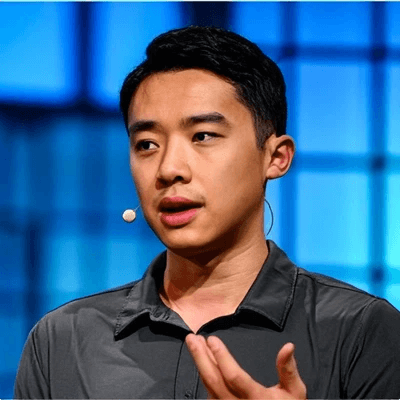
Nik Sharma
Founder & CEO
,
Sharma Brands
He launched Feastables For MrBeast | Nik Sharma
Nik Sharma, the DTC Guy and founder of Sharma Brands, on launching and scaling brands like Feastables, Rare Beauty, and Taco Bell campaigns.
Transcript
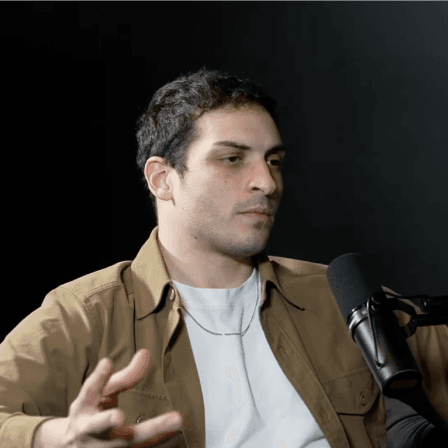
Manav: In this episode of Emerging Founders with Manav, I got a chance to interview Nik Sharma. He's the founder and CEO of Sharma Brands — they're building one of the biggest DTC agencies in the world. Nik is widely known as "the DTC guy," and he's worked with really big brands like Feastables, Taco Bell, and Rare Beauty, helping launch and scale a lot of these companies over the last few years. Nik gave me step-by-step advice on what an ideal launch strategy should look like for someone starting a DTC brand today. I had a great time talking with him, I hope you enjoy this episode.
How are you doing today, Nik?
Nik: I'm good, brother, thank you for having me.
Manav: You're a very interesting person — you got your start really early, and looking at how many different things you've done, it's kind of incredible, especially finding out you're still in your twenties. What made you want to start that early?
Nik: I was just kind of already in the world, I'd say. When I was in high school, I started doing social media for celebrities, and that's how I got into marketing and social media, understanding content and click-through rates. After high school, I joined an adtech company I'd first interned for, then took a full-time role there — I skipped college and went straight into that, and that's where I learned everything around paid advertising, copywriting, and ad creative.
Everything just kept compounding from there — each thing I did was an evolution of what came before. I started with organic social, then understood paid media and programmatic advertising, then joined a beverage company where I built and grew their e-commerce business, which is where I learned everything about e-commerce. Then I joined an agency, which taught me the agency side of the business. Sharma Brands now feels like a combination of all of that.
Manav: As an Indian, I have to ask — how was it working with Priyanka Chopra?
Nik: That was cool — that was back in high school. It was pretty unique, since I was mainly focused on the organic social side, so everything I did was around content, understanding how to get more eyeballs. It's interesting, when you work with celebrities, a lot of the time you're working directly with their teams, so it doesn't necessarily feel abstract — even with a huge celebrity, you're still operating in the same framework: this is a product people consume. You think of the person as a brand — they've got marketing, content, distribution, and a "product" they put out, whether that's a song or a movie. You approach it through that same lens.
Manav: A bit of context for the audience — Nik started an agency called Sharma Brands, and they do everything from PR to what feels like a modern-day Mad Men-type studio, cooking up slogans, ads, websites, everything. How would you describe Sharma Brands, since you do so much?
Nik: I'd say Sharma Brands is like a modern-day consulting firm for brands, focused on the customer acquisition funnel. Brands usually come to us at one of three stages. One is pre-launch — for example, we just launched David Beckham's new wellness brand this past Monday. All the way up to brands like Rare Beauty or Feastables, we're helping with the website, the content, the messaging, the media buying, the customer acquisition strategy.
The middle bucket is brands that are already scaling — doing anywhere from $30 to $500 million in e-commerce revenue — who come to us to optimize customer acquisition, customer retention, figure out new audiences to target, find new offers to tap into. The third bucket is massive companies that generally need project-based work — maybe a batch of creative to drive installs, maybe a strategy deck on how to sell more of a specific product globally, or sometimes it's literally spending time with their board, helping them understand how e-commerce really works today.
It's all over the place, but our main focus is customer acquisition for brands looking to scale online — and sometimes that means offline acquisition too, driven through online channels.
Manav: Ideally, what should a launch strategy or launch budget look like — what do you recommend to people starting out? A lot of people just start, then fail, and it fizzles out. Say, for example, I want to launch a new mouthwash targeting Gen Z — what advice would you give?
Nik: I think there are a lot of ways to do it, but one thing I've seen work successfully, over and over, is: first, the product has to have something that genuinely sets it apart. Say this mouthwash has something no other mouthwash has, whether it's taste, freshness, the actual ingredients, or specific benefits for your gums, whatever it may be. One of the main questions every consumer asks when making a purchase is: how is this different from anything else I could buy in this same category right now? If you can't answer that with something genuinely jaw-dropping, something that makes people turn their heads, you're going to lose that customer to whatever already has trust and brand awareness.
One strategy that's worked extremely well, and would probably work well here too: brands ship their product to anywhere from 1,000 to 4,000 or 5,000 creators before launch, give them a taste or trial of the product, and they use it and post content about it, essentially as affiliates — ideally on TikTok, since it's the easiest place to get traction. That becomes the awareness wave you go to market with, and from there you start tweaking what's working and what isn't, messaging-wise, creative-wise, maybe in the shopping experience itself, or how you talk about the product's benefits. From there you figure out your flywheel — maybe you can rely purely on affiliates and organic seeding for your first couple million in revenue, maybe your first $5 or $10 million, and then kick on the paid engine to start acquiring customers with paid media. Or maybe you launch with 500 to 1,000 creators and, as soon as you start seeing it work, jump straight onto the paid flywheel. That's roughly how I'd start, and from there, depending on how it goes, you decide whether to lean heavier into paid, heavier into content, maybe try advertorials, maybe focus more broadly on affiliate beyond just TikTok.
Manav: For anyone listening who has a brand and wants to work with Sharma Brands — is there a minimum requirement you look for to take on a brand?
Nik: Totally — we typically look for brands doing at least $15 to $20 million in sales and looking to grow. Sometimes it's smaller, sometimes larger, depends on the situation. If they're smaller, they usually have a pretty clear directive to become a category leader; if they're larger, we can get much more tactical on the performance side. Our general rule is, if you're at least around that size, or at least spending a couple hundred thousand dollars a month on advertising, it makes sense for us to get hands-on and as tactical as possible.
Manav: Is this a retainer-based business model, or do you also take equity in the companies you're scaling?
Nik: In my opinion, the equity piece is much more rewarding. We do that sometimes — not every brand is one we'll take equity in, but we've definitely taken equity, or a percentage of our billings as equity, in some brands. Another thing we do is, sometimes if a brand is raising money, we'll invest alongside our engagement with them. There have also been cases where we invest first, and then the company comes back and says, "wait, you guys are already invested, why don't you do our website too, why don't you handle this for us." So it happens in a lot of different ways. In the majority of cases, we don't take equity, because that also puts pressure on us to make sure the company is being run well and has a good financial outcome — but there have definitely been instances where we do.
Manav: That reminds me of Tim Ferriss taking advisory shares in Uber in exchange for some work.
This next question's about personal branding — for anyone trying to build a personal brand, say not launching a full company yet, but wanting to grow their personal brand and eventually launch a product off the back of it — what advice would you give? You've clearly mastered this, your Twitter growth has been incredible, and in my opinion a Twitter follower is worth 10 or even 100 times an Instagram follower. What was the inflection point for growing your Twitter, and any advice for someone trying to do the same?
Nik: Honestly, there was never really a specific goal behind it. When I was at a company called Hint Water, I'd just take whatever was performing well that I'd been running and post it on the internet. Every time I did, I'd get DMs from other people saying, "we're trying to do this too," or "how'd you do this," or "we tried this and it worked really well, let's grab coffee." I just started meeting a lot of cool people that way, and at some point I thought, wait, this is basically a hack — I don't need to go to some lame networking event, I can just post what's working, and the coolest people will find me. That's basically how it happened, and it just grew organically from there.
When I started, I think I had around 15,000 followers on Twitter, and I just kept focusing on everything DTC, e-commerce, media buying, performance marketing, and it grew from there. But there was never really any intent behind it — honestly I haven't tweeted much lately, I've been so busy — no schedule, no goals, no follower numbers I'm chasing. It's just: if something works, I'll post about it, and hopefully meet cool people because of it. I think the moment you try to over-engineer that process, it gets bad, gets corny — you become "the thread guy."
Manav: Exactly — the thread guy with the viral fluff content, but nothing of real tactical value.
I want to ask how you actually manage your time, because you seem to be doing so much — writing the newsletter, active on Twitter, speaking at events, running the company, you've got another startup too. Just thinking about it gives me anxiety. How do you manage all of that?
Nik: It sounds like a lot more than it actually is. Most of my day, from when I wake up to when I go to sleep, is focused on Sharma Brands — talking to new brands, working with existing clients, building the team, working with our internal team. When I walk to the bathroom, that's when I'm checking Twitter. On Saturdays, I'll wake up and carve out three or four hours for the newsletter. At some point during the week I record a podcast episode — that's maybe 60 to 90 minutes of prep, plus another 45 minutes to actually record.
Typically my day is scheduled from about 8 or 9 a.m. to 9 or 10 p.m., and Ryse, my assistant, basically decides what I'm doing every 30 minutes — literally blocks my calendar: "Nik wakes up at this time, Nik gets ready here, Nik travels to the office, Nik works on this task list, then jumps on these calls, then works this next task list, then has this meeting, then works these three tasks in the last 30 minutes." If there's an open gap in my calendar, or if he doesn't see me responding to something, or hasn't heard from me, he'll call me directly — "hey, what are you doing, here's what you need to be doing right now." A lot of it comes down to having the right team around me making sure I'm actually working on what I should be working on. Sharma Brands is also a team of probably 40 to 50-plus people, so a lot is always in motion — sometimes my role is just giving a little input on something that turns into a full project for two or three people on the team to execute.
Manav: Oh my god, your assistant sounds incredible — I actually had a chat with him, I was like, this guy's a machine. I'm really glad to hear you're already at 40 to 50-plus people. I'm honestly rooting for you guys to become one of the biggest ad agencies in the world — you've clearly found your niche and mastered it. One thing I love about everything you do is the design — it's always on point, I don't know who your design team is, but they're incredible. So anyone listening with a subpar website, if your brand is doing at least $15 to $20 million in revenue, reach out to Sharma Brands — they can really level up your landing page and take your brand to the next level.
Thank you so much for coming on the show, Nik, I really appreciate your time — hopefully we can do a recap episode in a year or two to see where you guys are at.
Nik: Would love to do that.
Manav: Awesome, thank you, Nik.
Nik: Thank you.