Business
Tech

Brian Wong
Founder
,
Kiip
From Teen Prodigy to $40M Startup – Brian Wong
Brian Wong on skipping four grades to graduate college at 18, raising $40M for Kiip, writing The Cheat Code, and moving into investing.
Transcript
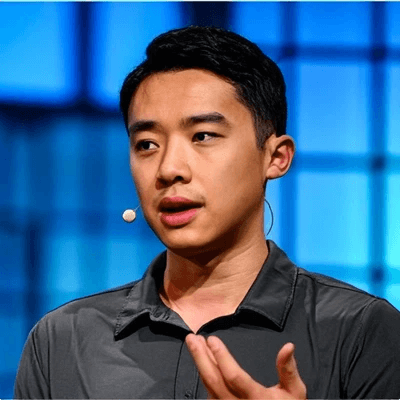
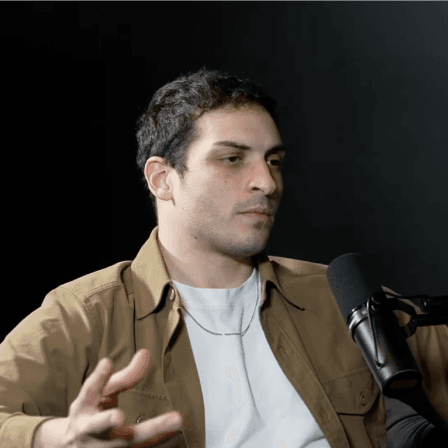
Manav: Hello everyone, on this episode of Emerging Founders with Manav, we have Brian Wong. Brian is the founder of Kiip, a mobile advertising platform that focuses on rewarding users during achievement moments in mobile apps. At the age of 18, Brian graduated from college — he skipped four grades, meaning he went to college at the age of 14. Brian attracted major clients like Kellogg's, McDonald's, and Coca-Cola while building Kiip. Over the years he also authored a book called The Cheat Code, where he lays out a lot of these secrets for other entrepreneurs. He's also started a venture called The Next Step, where he teaches people about public speaking. I got Brian on the pod today because I'm really tunnel-vision focused on mobile apps right now, and while researching other entrepreneurs in the space, I came across Brian and knew I had to talk to him.
I'm really excited to have you on the pod, Brian — how are you doing today?
Brian: Doing great, thanks for having me on.
Manav: I want to start from the inception of Kiip — I know you started the company at 18 or 19. What was the original idea, and what exactly did you build?
Brian: Kiip was one of those companies you'd think about now and there wouldn't even be a question of whether it should exist — this idea of rewarding people in mobile apps for interacting with brands. Today, being rewarded by a brand for watching a video, interacting with an ad, completing a task, buying a product — rewards are just innate to day-to-day brand interactions on mobile now. When we started the company, in 2010, that whole space was just beginning to get traction. Tools were being built for a wide ecosystem of apps across Android and iOS, and we were the first to do this beyond the basic monetization tools like AdMob and other ad platforms, which were really just translating banner ads onto mobile.
My whole thinking was, it was very linear to just shrink a banner ad down for a smaller screen — make the banner smaller, that's the "obvious" answer. But when you think about new platforms, we believed there was a way to evolve ads in a different dimension entirely, not just linearly — which was rewarding people. That idea of rewarding people within an ad blossomed into an entirely new category, and that's where Kiip came from.
Manav: I want to talk about how you were able to fundraise at that age — 19 or 20 — for this app.
Brian: The environment has changed a ton. I'm sure your viewers know we've since sold the company, it's now owned by inMarket, and I run my own VC fund now. The VC environment we raised in back in 2010 was very different. You had a handful of well-known VCs — Kleiner Perkins, Sequoia, Index, Khosla — mostly in the South Bay, Menlo Park, Sand Hill Road. That old-school VC lore was very much in play in 2010, which frankly made things a bit easier in some ways, because you only had a small handful of key people to talk to, and if you got in with them, you got in. That was actually the big criticism of early-stage venture at the time — though technically you could argue the '90s were the real "early days" of venture, when microchip companies were getting funded. Software and SaaS funding really picked up in the late '90s, mid-2000s, and I'd say 2010 was really the start of the Web 2.0 wave — if you think about the companies you use every day now, most of them got funded right around 2010: Airbnb, Uber, Pinterest, Spotify, most of the software you use today came out of that early-2010s era.
So, long story short, venture funding back then was concentrated in that small group of VCs, and the fact that they were betting on a young founder — the only other real data point they had for that pattern at the time was Zuckerberg. That dynamic shaped a lot of how things played out. Obviously the perspective on all of this has changed a lot since then — we've been through three or four more cycles since 2010: 2018, 2021, and now. The way people view companies, and which ones get funded, is very different today than it was back then.
Manav: I want to dig a bit deeper into that — for context, this is 2010 when Brian launches the company. From the brand's mindset, how did you think about plugging this reward program into an app, and how did you make sure it was actually targeted toward the right consumer?
Brian: The way we did it was through the type of app someone was using. For the longest time, targeting was all about the individual — okay, we're targeting you because you're Manav, living in a certain place, in a certain age group, with certain interests. For us, it was the opposite — the moment mattered more than the person. Say you're using a fitness app: the fact that you're in a fitness app, working out — if you'd just eaten lunch, it doesn't matter if I offer you a completely free burger from McDonald's, because you're not hungry. We realized timing mattered enormously.
When you finished a level in a game, or finished a workout, that's when you were receptive to messaging. You could be in the middle of a workout, in the middle of playing a game, and I could show you basically any ad — even something like a free dinner offer — and people wouldn't mind, because it mattered that it landed at the exact moment you were actually engaged with the app, in that flow, in that sequence.
Manav: I want to double-click on the idea of cycles, because it's useful to know the past to predict the future. 2008, the iPhone comes out, the mobile app boom happens — not really a bubble, but heavily invested in. Then we get Web3, and now we're seeing AI, and I'd predict humanoid robots are next. How do you think about predicting the next wave — are you personally involved in or curious about AI agents, are you funding or investing in that space, or do you feel like every company right now is just a GPT wrapper?
Brian: You actually skipped over a couple of growth vectors in between, though I know we don't have time to go through all of them — there was the sharing economy too, Uber, Lyft, Airbnb —
Manav: Right, exactly.
Brian: — and there was an AI wave even back then, some early chatbots starting to appear. Then Web3, crypto, NFTs, that whole wave. A bunch of these hype cycles, basically, not necessarily in strict sequence, but you get the idea. On AI specifically — I like to remind people, there was a mini AI boom before this one. AI has boomed multiple times, it's not the first time people have said "oh my god, AI is amazing." I think what finally pushed AI to today's hype level was ChatGPT, because it was something your mom could actually use and understand, and it was genuinely intelligent enough to get us there. But it's worth remembering, not that long ago you could barely ask Siri for the weather reliably — and honestly, Siri, even today with Apple Intelligence, is still a pretty weak product. So there's still a long way to go, even with all the hype around ChatGPT, Perplexity, Anthropic, and the rest.
Manav: So three things I'm seeing right now: one, AI and AI agents are making companies leaner and leaner. Two, we're seeing higher-education MBAs struggling to find jobs. Three, entrepreneurs seem more confused about what to work on, because it feels like every idea's already been done, and people are increasingly paralyzed by that. As an investor, what actually catches your attention — what makes you go, "oh my god, this is what I want to fund, this is going to be massive"?
Brian: Those three things you mentioned are a useful collection of observations, a good heuristic for reading the world right now — MBAs finding it hard to get jobs, ideas feeling like a dime a dozen, everything already done before. But that sentiment isn't new — it was the same 10, 15 years ago. You'd pitch an idea and every VC would say, "well, can't Google just build this," or "someone's already built this." It was always that way. And 10 years ago, MBAs had trouble getting jobs too, partly because of the internet's disruption of traditional career paths.
Honestly, MBAs will probably always have some trouble finding jobs, because frankly, going the traditional "find a job" route after an MBA is kind of the wrong move to begin with. If you want a comfortable, adult babysitting-type situation, sure, an MBA is a fine place for that. But if your real goal is to find meaningful work, you shouldn't be looking for a job — you should be making your own job. That's why being a founder is great, or at minimum, finding companies with real gaps and going in to practically solve a problem, rather than generally trying to solve your own problem of not knowing what to do with your life in the first place.
Manav: I want to talk about failure too — what's a failure that felt like a failure in the moment, but ended up setting you up for later success? It could be a story from the company, or something personal — I think people relate to hearing about failures just as much as successes.
Brian: I think every founder has these crazy moments. At Kiip, we had multiple near-death experiences, months away from running out of money at different points, lawsuits, a lot of things happened. What I can tell you, looking back, is that nothing is ever as terrible as it seems in the moment, and nothing is ever quite as good as it seems either. That's the real lesson — in the moment, you're always going to blow things up in your head, because you genuinely care.
Manav: I think the biggest takeaway for me is trying to be as stoic as Brian about all of it. For people watching, where can they find you? I know you're on LinkedIn, you have your own website — can you point people in the right direction?
Brian: It's easy, it's BrianWong.com — you can apply for The Next Step program through there, and you can reach out to me directly through there too. Just make sure it's BrianWong.com, not .doom.com, that's a different Brian Wong — he's cool too, actually, I know the guy — maybe he'll give me his domain one day.
Manav: Thank you everyone for watching, that's another episode of Emerging Founders. Brian, thank you for coming on the show, I had a lot of fun talking to you.